So this post will be a mix of photos I took within last month. There are many photos I've taken and processed but haven't put up here in this blog. Last month's birding mainly covered around Furui-chi and Sekino-e area. There were some interesting migrants passing by during the last week of May. These included Pheasant-tailed Jacana, Whiskered Tern, Cattle Egrets, Red-rumped Swallows and House Swifts. Most of these had already gone except the swift and the swallow which seem to be nesting somewhere around here.


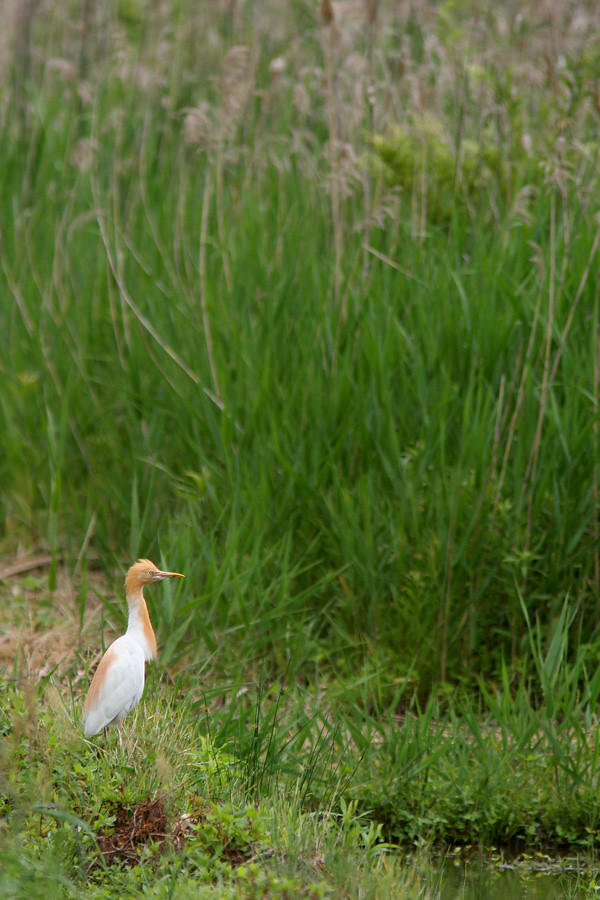 I like the Cattle Egret (Bubulcus ibis coromandus). It looks so beautiful in the breeding plumage. Too bad there are not so many in Beppu. I only saw 2 birds feeding in the field. One was still in its non-breeding plumage and another one, which is the one in the above photos, has already completed its moult.

 About 4-5 male Oriental Reed Warblers (Acrocephalus orientalis) were singing in the reeds both around Furui-chi and Sekino-e areas. These birds are extremely shy. I think they're much more approachable in their wintering grounds like Thailand, for example. I got many photos of this species in Thailand but those shots are not very attractive because the birds always stay close to the ground with messy backgrounds. I have to try harder to get some better shots of them while singing.

 I took quite a lot of photos of this Whiskered Tern at Sekino-e. The bird only stayed for 2-3 days but it was quite obliging comparing to other special birds around there. It allowed me to get pretty close to it and often flied close to me. I tried capturing some flight shots but the results were not so good.

 It used the rock in a small pond near the field as a resting spot.
Before taking off, the bird always stretches its wings first.
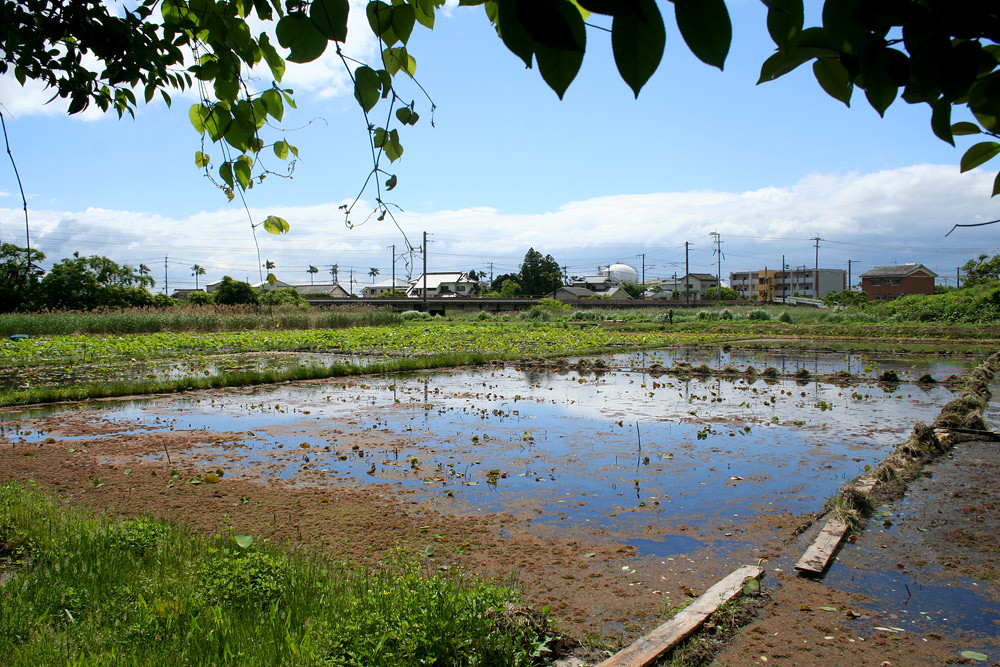 Here's a photo of the lotus field at Sekino-e.
 Intermediate Egret
 House Swifts
And the below shots were all taken at Asami on the same day I took photos of the Green Pheasant. The place was a small cultivated area located on the hill and bordered with thick forest and city. In the forest, I found several flocks of Red-billed Leiothrix, Siberian Meadow Buntings and surprisingly a Common Kingfisher. It was perching around a small stream in the forest. I've never seen the species in habitat like this before. Lots of Oriental Bush Warblers were singing on treetops in the morning and followed with lots and lots of Lesser Cuckoo's songs.
 Red-billed Leiothrix
 Oriental Bush Warbler
 Here's a fledgling of the Meadow Bunting.

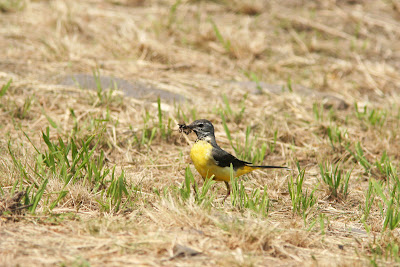 This female Grey Wagtail was very busy collecting foods for her youngs. It seemed like the nest was very far away so I just couldn't follow the bird to see its chicks.
 And a panoramic view of Asami area where I photographed the pheasant to finish up with.
 Red-billed Leiothrix
 Oriental Bush Warbler
 Here's a fledgling of the Meadow Bunting.
 This female Grey Wagtail was very busy collecting foods for her youngs. It seemed like the nest was very far away so I just couldn't follow the bird to see its chicks.
 And a panoramic view of Asami area where I photographed the pheasant to finish up with.