Showing posts with label Baikal Bush Warbler. Show all posts

Monday, March 7, 2011

Twitchers at Nam Kham

Well, it was back in February 9th, only 2 days after my arrival back at home in Thailand. I headed right to Nam Kham Nature Reserve in Chiang Rai Province with Nuk, one of my birding colleagues, in search of the 2 rarities which appeared to be regular visitors to a waterhole inside the nature reserve area. These 2 rarities are White-tailed Rubythroat (Luscinia pectoralis tschebaiewi) the mascot of the nature reserve, and the Chestnut-crowned Bush Warbler (Cettia major). However, we've also been informed that the former has been absent from the waterhole for quite a while, as there was one bird photographer who put out worms in hope of attracting the bird, the worms instead brought out 2 aggressive male Siberian Rubythroats (Luscinia calliope) which finally made the shyer White-tailed Rubythroat disappeared. Mealworms are prohibited within the reserve area since then.
Male Siberian Rubythroat (Luscinia calliope)
Dusky Warbler (Phylloscopus fuscatus)

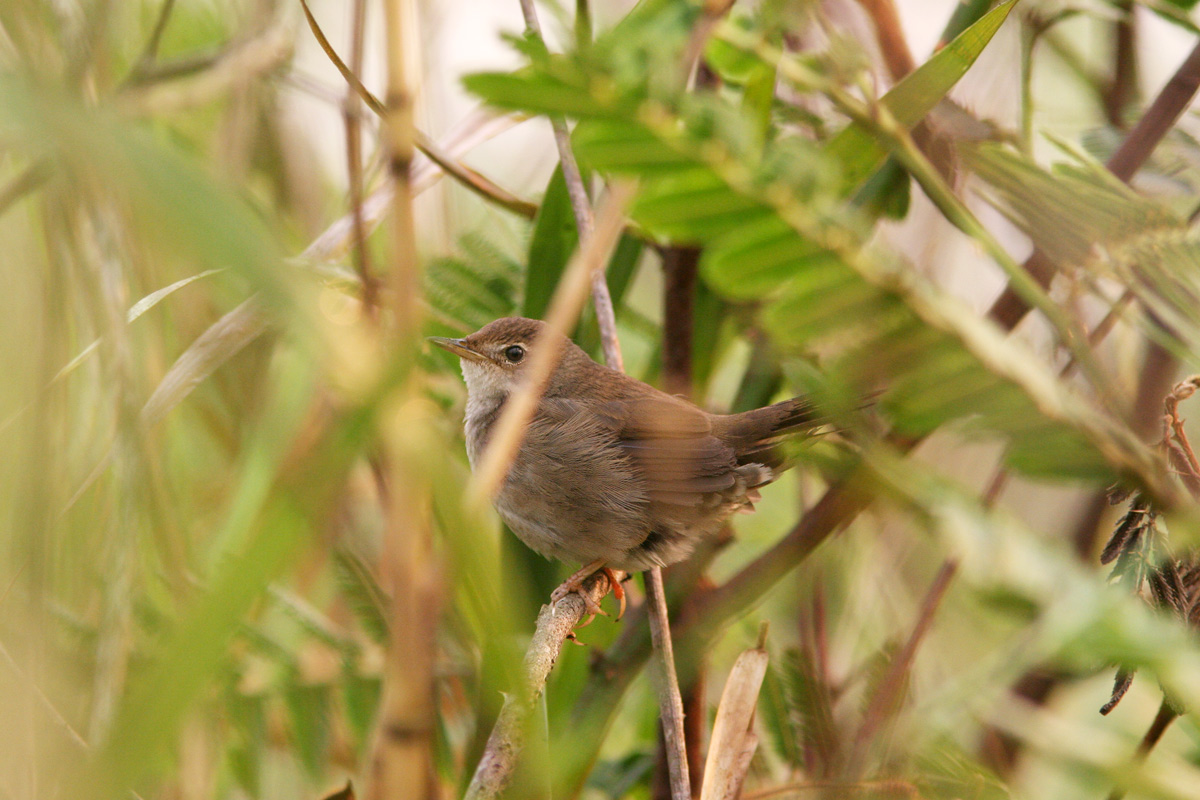
Baikal Bush Warbler (Bradypterus davidi); female/non-breeding?
Common Sun Skink (Eutropis multifasciata)
Another male Siberian Rubythroat (Luscinia calliope)
We arrived at Nam Kham around 8 o'clock and went straight into the Cettia Hide, where both of the rarities were found. We were welcomed by the common stuff like Baikal Bush Warblers, Dusky Warblers and of course, Siberian Rubythroats. I didn't try the Rubythroat Hide, which is further in the reeds, since I didn't know that another rarity, the Chinese Bush Warbler (Bradypterus tacsanowskius) has just been found a few days earlier at that hide. We waited in the Cettia Hide until around 3:30pm, when the Chestnut-crowned Bush Warbler made its first appearance at the waterhole. It was already dark at that time, since the waterhole is located deep in the middle of reeds. The bird was very skittish at first and didn't come down to the waterhole. It later disappeared and showed up again at 4:00. This time it came down to the waterhole, but was chased off shortly after taking bath by the male Siberian Rubythroat. It appeared again at 4:30 and this time it took a really long bath before flying back into the reeds by itself.


Chestnut-crowned Bush Warbler (Cettia major)

Baikal Bush Warbler (Bradypterus davidi); heavily spotted breast (male?)
So we failed to see the male White-tailed Rubythroat, but at least we've got to see the great Chestnut-crowned Bush Warbler. These two birds were extremely rare before Nam Kham Nature Reserve was established. With extensive research and well protection, a great number of rare species is constantly reported from the area. The nature reserve is now a private area owned by Dr. Rungsrit Kanjanavanit, the chairman of my local bird club, Lanna Bird and Nature Conservation Club (LBNC), but is normally open for birders and researchers.


All videos captured by Nuk; apologies for my noisy shutter sound

Sunday, October 3, 2010

Before Departure

Still a post about Thai birds. The early morning of September 27th saw me biking down to my favourite area on the river bank of Mae Taeng River. My flight was due to leave Chiang Mai in the evening, but I didn't want to waste my time doing nothing at home. It was another overcast morning and the rain came drizzling down a bit around 9 or 10. When I arrived, there was a large flock of Black-crowned Night-Herons roosting inside the reeds on the river bank. The birds flew up all at once as I parked my bicycle near them, unintentionally, of course. So there were about 40 birds, both adults and juveniles. Along with the night-herons, several Yellow and Cinnamon Bitterns and Chinese Pond-Herons also flew off from the reeds as well.

A flock of Black-crowned Night-Herons

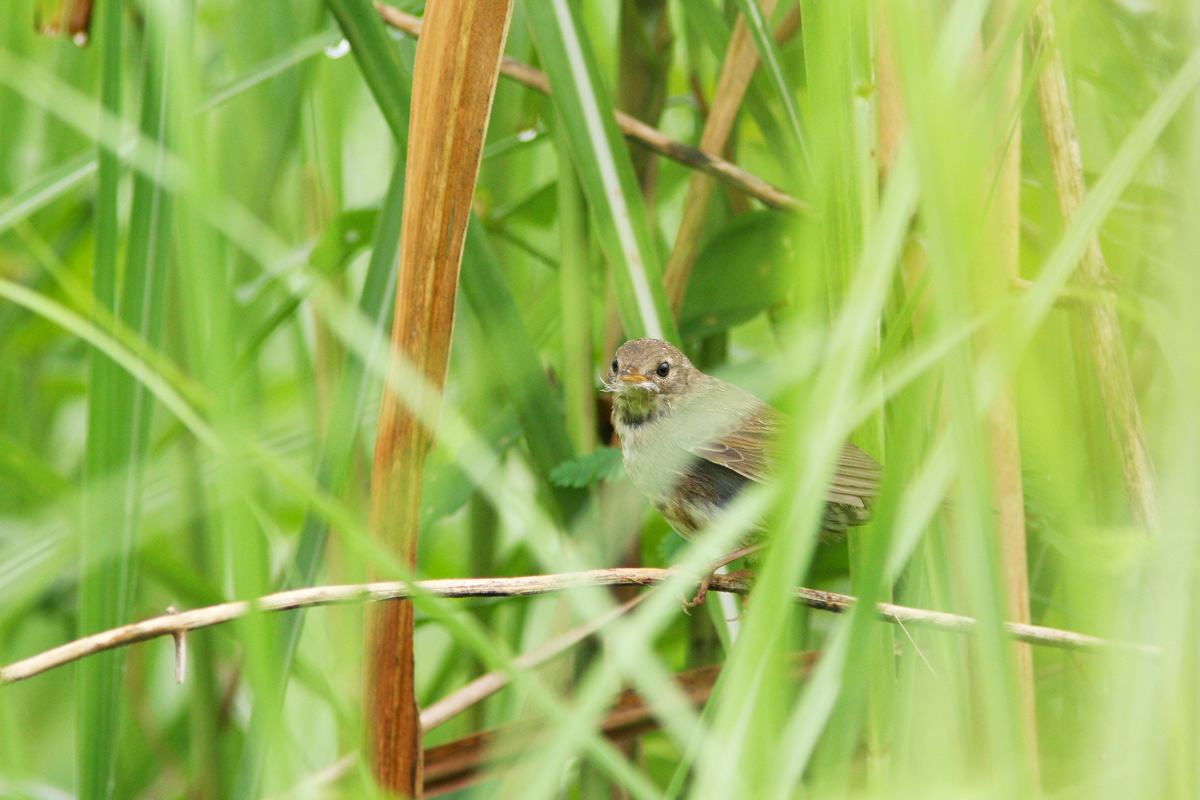
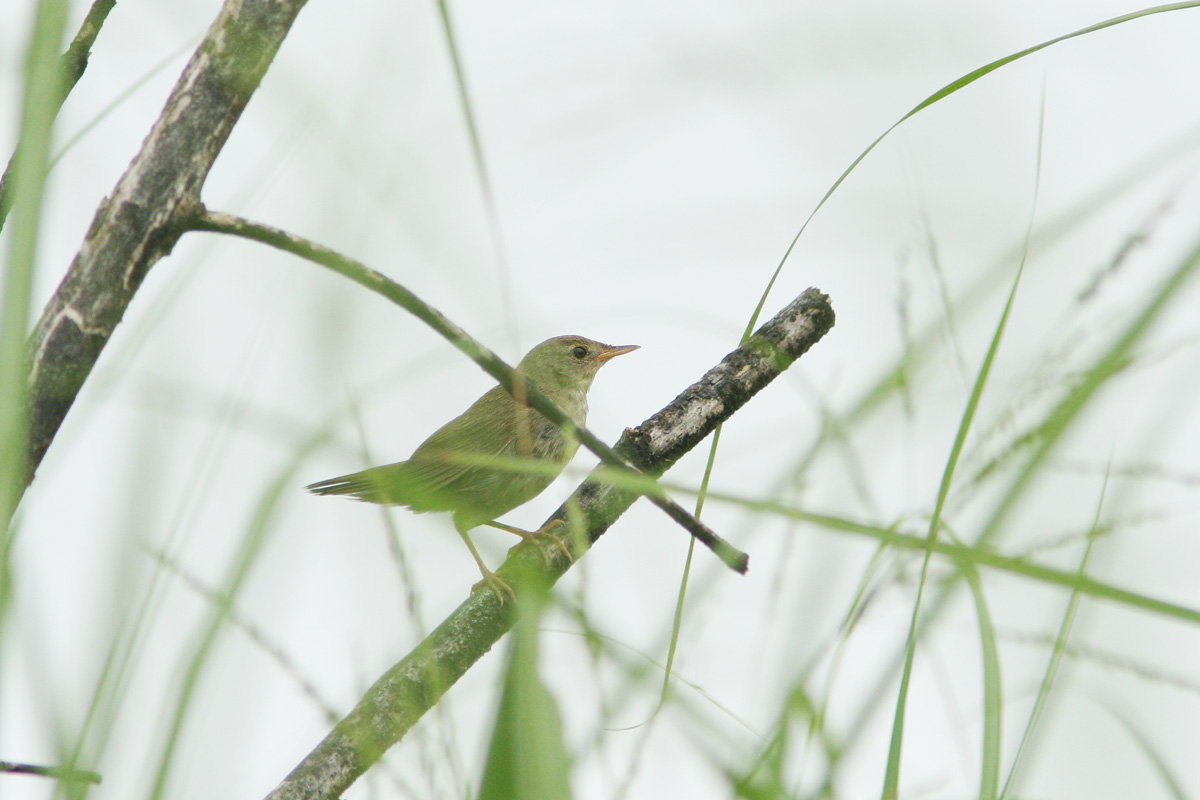
The area was filled with soft thrilling songs of the Chestnut-capped Babblers and the sweet robin-like song of the Yellow-eyed Babbler as usual. I tried searching for the avadavats but they didn't seem to be around and I also didn't hear their soft high-pitched calls as well. Instead, I came across something more interesting, a juvenile Baikal Bush-Warbler (Bradypterus davidi). The bird flushed up as I walked through the grass. I thought it was the same Rusty-rumped Warbler I've seen the day before, but then the bird slowly crept out from the bush and I saw that it was the bush-warbler instead.

Juvenile Baikal Bush-Warbler (Bradypterus davidi)


I actually thought the bird would have disappeared into the grass, but it slowly came out instead. That's why I love seeing LBJs so much, seeing them creeping out slowly from the bush, that's just pure excitement. The bird came out to inspect me at first, then dried itself on a thin open twig. Its plumage looked really wet since it always stayed under thick grasses.


The bird didn't stop making me surprised. After it stayed on that perch for a few minutes, it flew up to the top of the dead branch nearby, aggressively calling to another bird hiding in the bush below. I was so shock to see how brave this little bird was, as I've never seen a Bradypterus bush-warbler acting bravely like this in Thailand before. The bird should be extremely shy outside its breeding ground. I'm so happy to once experience this.

I actually once encountered a bird acting similarly to this one at Nam Kham Nature Reserve before. It was in March 2008. A seemingly pale variant adult (or a juvenile, I'm not really sure) aggressively called to me when I accidentally stepped into its area. It went up to the upper branch and stayed for several minutes calling from that perch. However, that time the bird still tended to hide among the bush, unlike the recent encounter I had.

To end this entry, I have some photos of the Lesser Coucal (Centropus bengalensis) in full breeding plumage to share with you. It's a bird that means pretty much to me. I haven't seen this bird for a few years now, even more if talking about breeding plumage. It used to be seen regularly at Cho Lae, but since the farmers turned all dense grassy areas into rice fields, this bird completely disappeared. I was so happy to find this one came out drying its wings on the top of the grass. It looks very similar to its much commoner and much better at adapting relative, the Greater Coucal, in breeding plumage, but it has a smaller body with dark blackish eyes. In non-breeding plumage, the bird turned into a totally different look. It has totally brown plumage with pale streaks all over its body.

Lesser Coucal (Centropus bengalensis) in breeding plumage