Showing posts with label Black-crowned Night-Heron. Show all posts

Monday, January 30, 2012

Other Birds From Fukuoka

This will be the final post for my trip to Fukuoka during the year's end and new year vacation. I found Imazu a very nice place for birding, even though I couldn't get any photo of the Black-faced Spoonbill in close range. Apart from the c. 100 Falcated Ducks in the earlier post, there were tonnes of many other ducks staying at the river mouth. Most of them were Mallards and Chinese Spot-billed Ducks, but I also found interesting species like 1 male Baikal Teal and at least 5 Common Shelducks among the flocks as well. Northern Pintails and Eurasian Wigeons were also numerous, with some Red-breasted Mergansers, Northern Shovelers and Common Teals. I believe that if I had a telescope with me, I'd be able to pick out some more.
A view of Zuibaijigawa (瑞梅寺川) at Imazu

Chinese Spot-billed Ducks (left) and a male Baikal Teal (right)
A flock of Great Cormorants (Phalacrocorax carbo)
Two resting Common Shelducks (Tadorna tadorna)
A crappy record shot of a 1st-winter Saunders's Gull (Larus saundersi)
On my second visit to Imazu, I also spotted a first-winter Saunders's Gull (Larus saundersi) resting on a sandbar along with the ducks. It is another globally endangered species which occasionally spends its winter in Kyushu. I've seen quite many of them back in 2009 when I visited Ariake Sea in Saga Prefecture. On the right side of the river, there were patches of rice fields where a pair of Tundra Swans was spotted earlier in December. Unfortunately, I wasn't lucky enough to see them. There was a flock of about 10-15 Northern Lapwings (Vanellus vanellus) in the rice fields though. I've never been able to get close to this shy species. Below are my best attempts of getting their photos.

Northern Lapwings (Vanellus vanellus)
They liked to hide among the dried grass.
Eurasian Magpie (Pica pica japonica)
Non-breeding Dunlins (Calidris alpina)
Eurasian Magpies (Pica pica japonica) were occasionally found in people's garden and along the roads. However, they were not as easy to photograph as I thought. After all, I could only get one (relatively) decent shot of it standing on the grass while picking up the food. In one of the small canals that flows into Zuibaiji River, I found a flock of about 50 Dunlins (Calidris alpina) resting and chirping like little chicks. I've never heard their voices before, but they seemed to be especially vocal at the time that I found them. They later flew out and made a nice aerial show for a few minutes before landing on the opposite side of the canal.
Female Osprey (Pandion haliaetus) carrying quite a huge lunch
An adult Eastern Great Egret (Casmerodius modesta) with nice breeding plumes
A young female Common Shelduck (Tadorna tadorna)
Juvenile Black-crowned Night-Heron (Nycticorax nycticorax)

Non-breeding Dunlins (Calidris alpina)
From the little research that I made before going to Fukuoka, Tataragawa River (多々良川) seems to be another great place to see Black-faced Spoonbills at close rage. I went there by walking quite a distance from the Kaizuka Station and asked local people about the area where the spoonbills are normally seen. I could finally find the place where the spoonbills are said to come and roost, but there was no spoonbill in sight. I waited until it was almost completely dark despite the biting cold wind and rain, but still no spoonbill came to the roosting site. Finally I had to leave for a warmer place and go back to the city without any photo of the spoonbill. To end this long post, below is a video of Dunlins that I took while waiting for the spoonbills at Tataragawa. I certainly need to pay a second visit to Fukuoka!

Friday, November 12, 2010

November 3

Well, in case you're getting bored of those Bean Geese, here's some photos of other birds from a nice morning at Sekino-E. The area proved to continually be productive since the start of the month with an influx of Daurian Redstarts and thrushes. I even came across a pair of Chinese Penduline-Tits (Remiz consobrinus) at the edge of the reedbed near the lotus field. It's the first record for Beppu, but I've already seen many of them in Saga. Too bad the birds were too active and I couldn't get any record shot of them. A female Common Kestrel was also presenting in the area, but was constantly chased by the crows. I was quite surprised to see several Red-rumped and Barn Swallows still lingering around instead of migrating to the southern hemisphere.
My best shot yet of the Common Kingfisher (Alcedo atthis)

Male Daurian Redstart (Phoenicurus auroreus)
I was very pleased to get the above shot of the kingfisher. It was something really unexpected, as the bird always flew off before I could get any closer than 20 or 50 metres. However, for some reason the bird in the picture didn't seem to notice me, and gave me a rare chance to photograph it at close range and in good light. The redstarts, on the other hand, are so easy to get photos of. They always stay within their territories and are much less wary than the kingfisher.

Female Daurian Redstart

Sunday, October 3, 2010

Before Departure

Still a post about Thai birds. The early morning of September 27th saw me biking down to my favourite area on the river bank of Mae Taeng River. My flight was due to leave Chiang Mai in the evening, but I didn't want to waste my time doing nothing at home. It was another overcast morning and the rain came drizzling down a bit around 9 or 10. When I arrived, there was a large flock of Black-crowned Night-Herons roosting inside the reeds on the river bank. The birds flew up all at once as I parked my bicycle near them, unintentionally, of course. So there were about 40 birds, both adults and juveniles. Along with the night-herons, several Yellow and Cinnamon Bitterns and Chinese Pond-Herons also flew off from the reeds as well.

A flock of Black-crowned Night-Herons

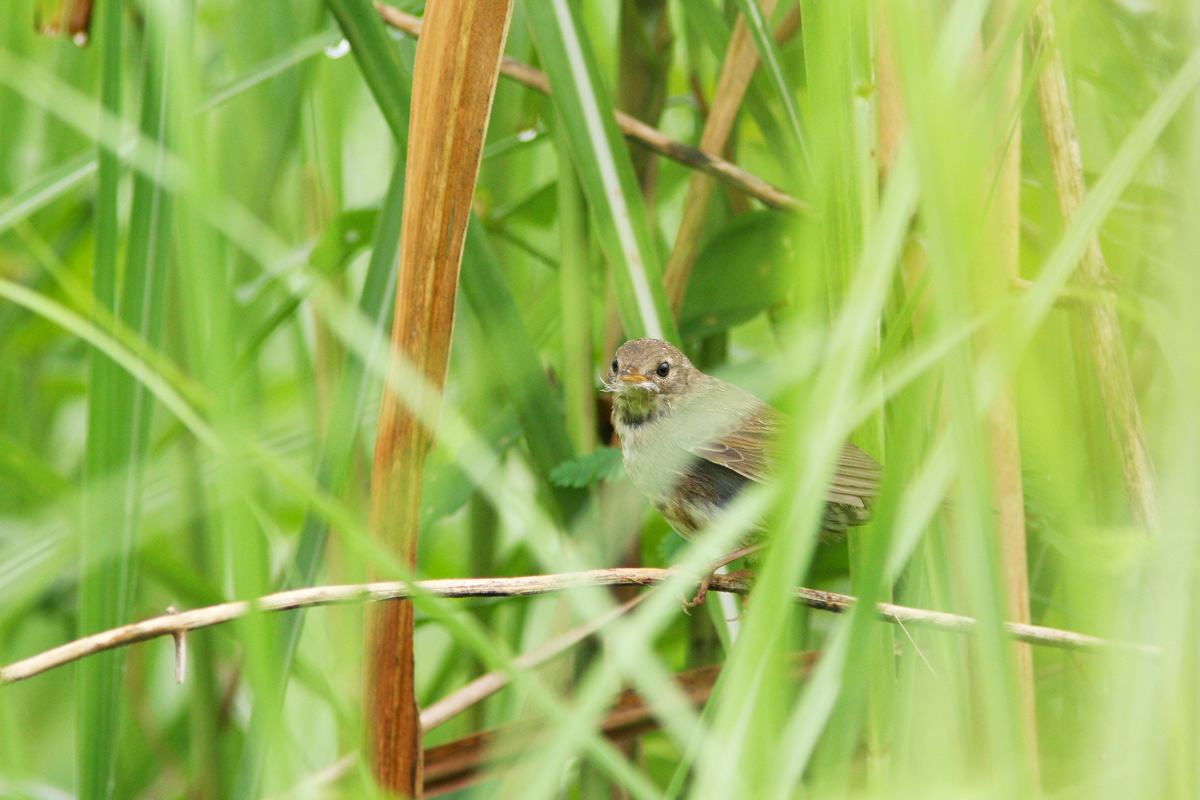
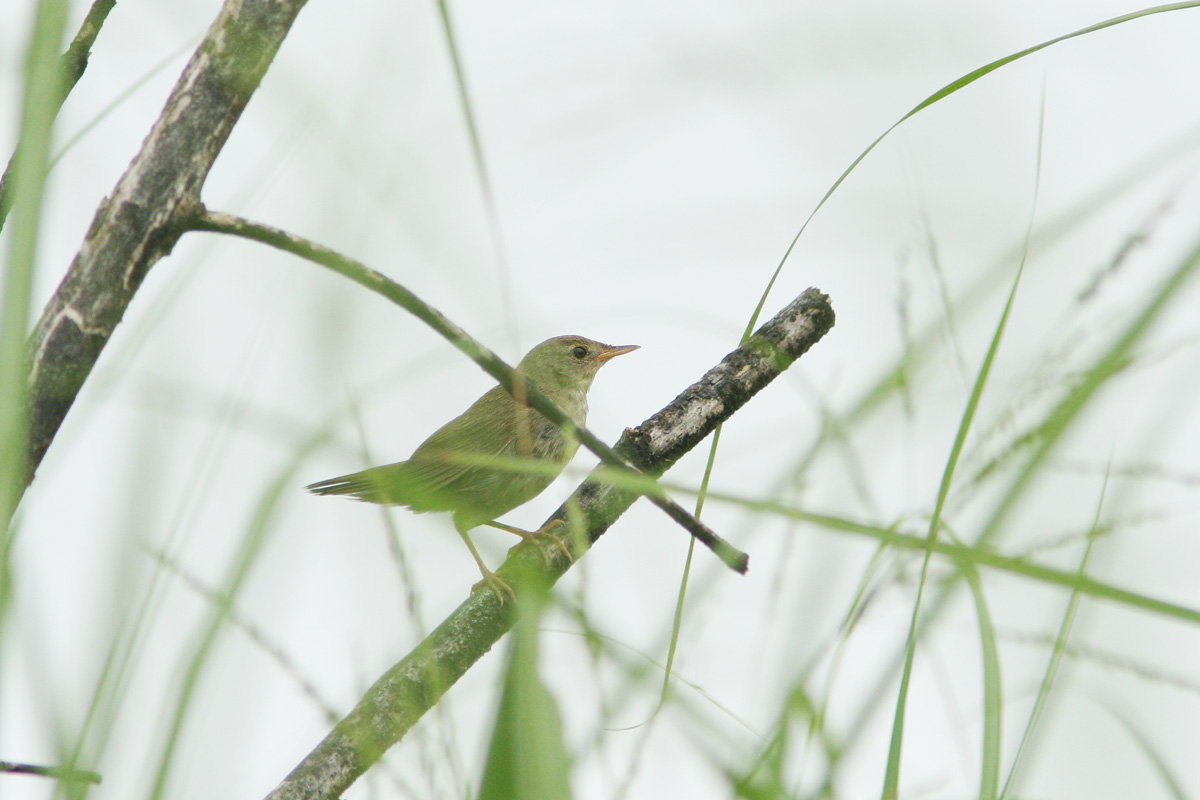
The area was filled with soft thrilling songs of the Chestnut-capped Babblers and the sweet robin-like song of the Yellow-eyed Babbler as usual. I tried searching for the avadavats but they didn't seem to be around and I also didn't hear their soft high-pitched calls as well. Instead, I came across something more interesting, a juvenile Baikal Bush-Warbler (Bradypterus davidi). The bird flushed up as I walked through the grass. I thought it was the same Rusty-rumped Warbler I've seen the day before, but then the bird slowly crept out from the bush and I saw that it was the bush-warbler instead.

Juvenile Baikal Bush-Warbler (Bradypterus davidi)


I actually thought the bird would have disappeared into the grass, but it slowly came out instead. That's why I love seeing LBJs so much, seeing them creeping out slowly from the bush, that's just pure excitement. The bird came out to inspect me at first, then dried itself on a thin open twig. Its plumage looked really wet since it always stayed under thick grasses.


The bird didn't stop making me surprised. After it stayed on that perch for a few minutes, it flew up to the top of the dead branch nearby, aggressively calling to another bird hiding in the bush below. I was so shock to see how brave this little bird was, as I've never seen a Bradypterus bush-warbler acting bravely like this in Thailand before. The bird should be extremely shy outside its breeding ground. I'm so happy to once experience this.

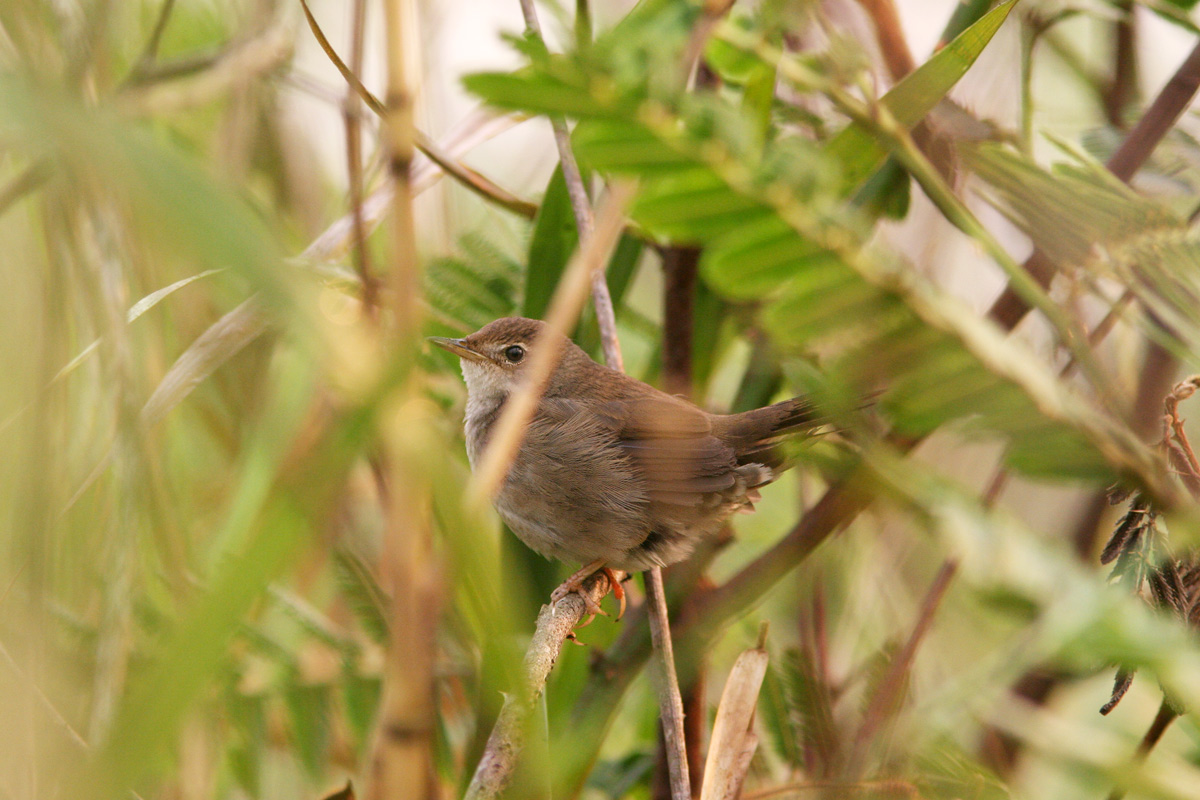
I actually once encountered a bird acting similarly to this one at Nam Kham Nature Reserve before. It was in March 2008. A seemingly pale variant adult (or a juvenile, I'm not really sure) aggressively called to me when I accidentally stepped into its area. It went up to the upper branch and stayed for several minutes calling from that perch. However, that time the bird still tended to hide among the bush, unlike the recent encounter I had.

To end this entry, I have some photos of the Lesser Coucal (Centropus bengalensis) in full breeding plumage to share with you. It's a bird that means pretty much to me. I haven't seen this bird for a few years now, even more if talking about breeding plumage. It used to be seen regularly at Cho Lae, but since the farmers turned all dense grassy areas into rice fields, this bird completely disappeared. I was so happy to find this one came out drying its wings on the top of the grass. It looks very similar to its much commoner and much better at adapting relative, the Greater Coucal, in breeding plumage, but it has a smaller body with dark blackish eyes. In non-breeding plumage, the bird turned into a totally different look. It has totally brown plumage with pale streaks all over its body.

Lesser Coucal (Centropus bengalensis) in breeding plumage