Showing posts with label Oriental White-eye. Show all posts

Wednesday, September 29, 2010

Mae Kampong Village

I went to Mae Kampong village in the eastern part of Chiang Mai with Prof.Mark on September 20th. I've heard a lot about this village and I wanted to explore the birds over there. The village is well-known among foreigners as a popular home-stay village and a place of Thailand's "Flight of the Gibbon". The forest around the village's still looking really good and we saw more than 30 species of birds in just one day.

The most numerous species was definitely the small Oriental White-eye (Zosterops palpebrosus). We found several fast-moving flocks almost everywhere we stopped the car. We also enjoyed watching a young bird being fed by its parent while we were having lunch.

Black-crested Bulbul (Pycnonotus melanicterus)
Red-whiskered Bulbul (Pycnonotus jocosus)
Common Tailorbird (Orthotomus sutorius)
Speckled Piculet (Picumnus innominatus)

Most of the birds we found are general forest birds, but they were in quite a great number. The place should be much better in winter when there are many migrants. The stars of the day were surely the Scarlet Minivets in this post and the above tiny Speckled Piculet. Piculet is a tiny member of the woodpecker family. The bird is just roughly 10cm long. The bird stayed around in the wave for almost an hour.
Mae Kampong Village
Prof.Mark shooting photos of the Red-whiskered Bulbuls
A view from the top of the mountain

Monday, August 23, 2010

Doi Angkang: 12-14 Aug 2010 II

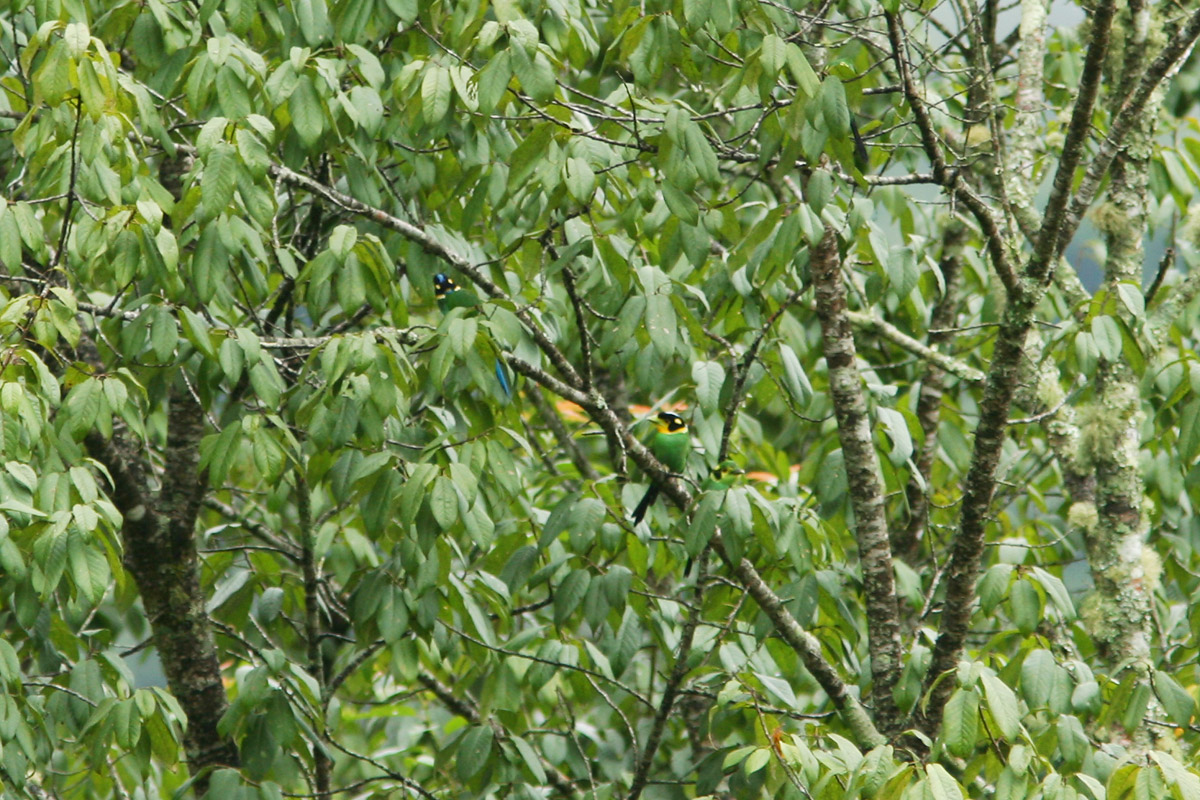
The real highlight of the second day came when a large flock of more than 20 Long-tailed Broadbills (Psarisomus dalhousiae) appeared in a large tree on the different side of the hill. The bird is incredibly beautiful with its comical black, yellow, green and blue pattern. Too bad the birds were all too far for my lens, but we all had a good time watching them from a telescope. There were many juvenile birds in the group as well and they look so different from the adults. It was the first time for me to see a juvenile of this bird. If you want to see how pretty the bird actually is, you can simply click here.
Long-tailed Broadbills (Psarisomus dalhousiae)


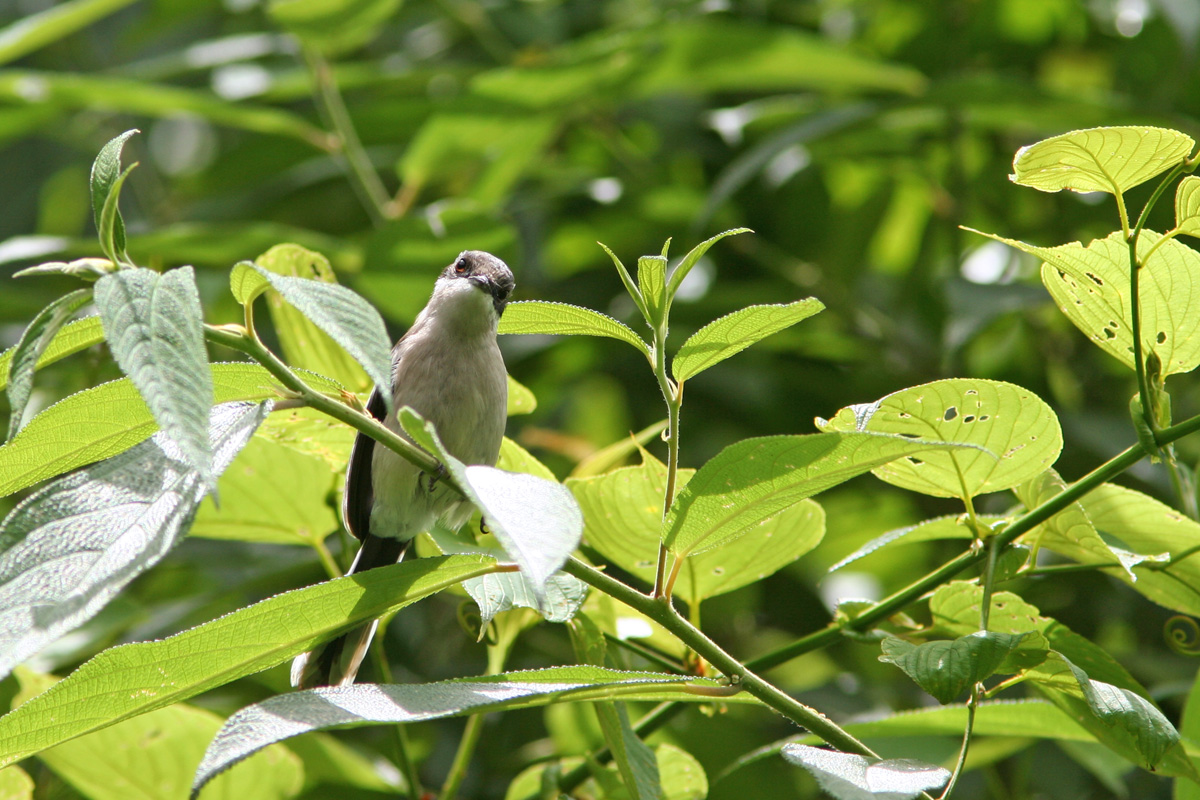
(From left to right) 1. This worn male Hill Blue Flycatcher (Cyornis banyumas) was also sticking around under the thick vegetation at the Royal Project's restaurant. 2. This young female seems to be the fledgling of him. 3. An immature Long-tailed Shrike (Lanius schach) in a garden near the restaurant 4. Blue-winged Siva (Siva cyanouroptera)

This shy Green-billed Malkoha (Phaenicophaeus tristis) was feeding along a thick dense bush in the garden near the Royal Project's restaurant. Although being a subfamily of the cuckoos, malkohas build nests and raise their own chicks unlike true cuckoos. The Green-billed Malkoha is a common bird throughout the country, but undoubtedly a difficult bird to get a decent pic of. It is very shy and almost always stay inside thick bushes.

On the last day, we luckily spotted 3 adult Crocodile Salamanders (Tylototriton shanjing) sitting still at the bottom of a small pond inside the garden near the restaurant. They had an interesting habit of swimming up from the bottom of the pond to catch insects on the surface of water. We later picked two of them up to the bank shortly for taking photos before letting them crawled back to the pond.


I spotted a large flock of Bar-winged Flycatcher-Shrikes (Hemipus picatus) staying on the top of a very tall tree in the garden since the early morning. I could only hope for the birds to come down to the lower trees, so I could be able to take some photos of them. Finally, before leaving the place, some of the birds came down to the lower trees and gave me a chance to photograph them. One immature bird even perched in front of me in a very close range calling for food from its parent. Since it's a species which I haven't successfully got a decent photo of, I was quite happy with the result.

Wednesday, September 2, 2009

Doi Angkang: Aug 22-23

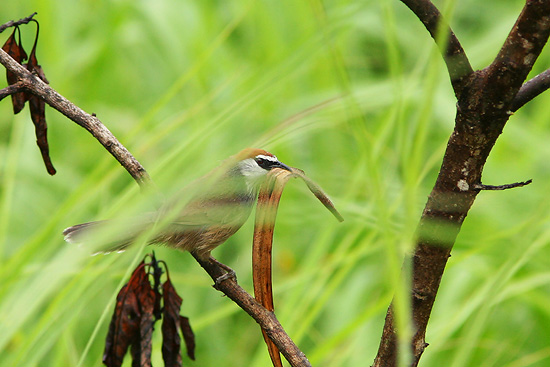
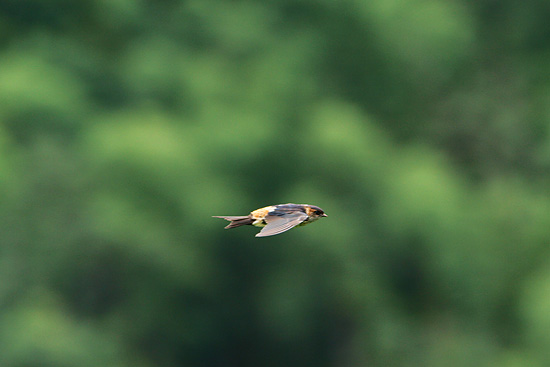
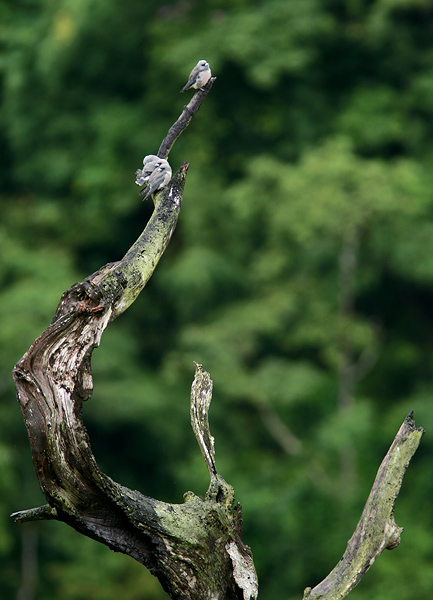
Just being too lazy to write about birds from Doi Angkang trip two weeks ago. As I have said before, it rained most of the time and we couldn't go out birding so much, but we surprisingly got several interesting species within a very short period of time. We arrived Doi Angkang quite late in the afternoon. We stopped at the first viewpoint and got some swallows including Striated Swallow (Hirundo striolata) and the winter visitor Red-rumped Swallow (H. daurica) and Barn Swallow (H. rustica). Few Ashy Wood-Swallows (Artamus fuscus) were also perching on a very artistically beautiful dead tree. Near the car park we saw two Chestnut-capped Babblers (Timalia pileata) moving around in dense grass. It is quite common here at Doi Angkang, though relatively uncommon elsewhere. One of the bird was carrying a long dry grass, which supposed to be used for nest-building. Along the road we found one juvenile Crested Goshawk (Accipiter trivirgatus) perching on a dead tree before flying out as we tried to approach it. A noisy group of White-browed Scimitar-Babbler (Pomatorhinus schisticeps) mixed with White-browed Laughingthrush (Garrulax sannio) was also seen in a plum garden along the road too.
A Chestnut-capped Babbler carrying a dry grass preparing for its nest.
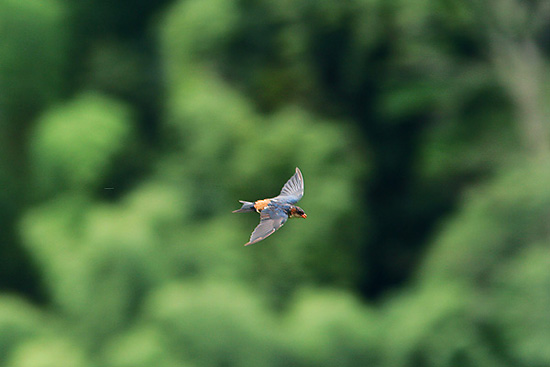
A juvenile Striated Swallow; Note its orange beak.
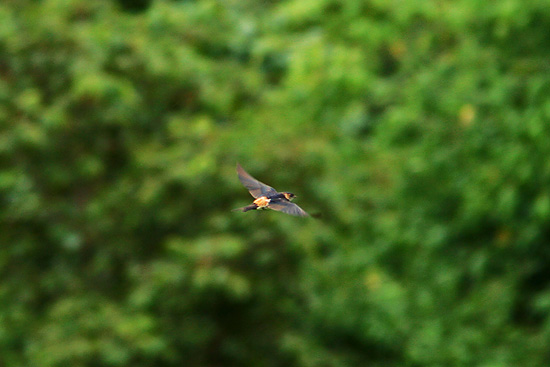
A worn Red-rumped Swallow; Note rufous nuchal collar.

In the evening we spent time birding around the checkpoint at Doi Angkang-Fang junction. Here we found 2 pairs of Long-tailed Minivet (Pericrocotus ethologus) moving together along the pine trees. A Japanese Tit (Parus minor) and a Chestnut-vented Nuthatch (Sitta nagaensis) were also feeding together with the minivets. A surprise was a pair of Spot-winged Grosbeak (Mycerobas melanozanthos) male and female which appeared at dusk. The male bird perched on a pine tree and gave a strange call which somewhat reminds me of a laughingthrush. Before dark, there was a nice bird-wave moving around in low bushes, which included 10+ Silver-eared Mesia mixed with Blue-winged Siva and a beautiful male Verditer Flycatcher. The next day we didn't go birding anywhere since it rained so hard, so we decided to leave after 12. Along the way back we also got a pair of Chestnut-bellied Nuthatch (Sitta castanea) feeding in a deciduous forest near Ban Arunothai village. They were the subspecies S.c.tonkinensis of NW Thailand, which has very dark chestnut underparts. Before leaving Ban Arunothai area, also we saw a lone Rufous-winged Buzzard (Butastor liventer) perching on a dead tree along the roadside. This guy was quite cooperative so I could finally managed to get some good shots of this species. In all we got over 70 species in only two days of birding! This should satisfy my hunger in birding for quite a while.
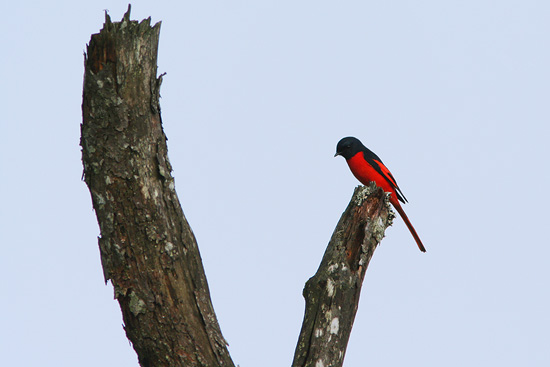
A male Long-tailed Minivet
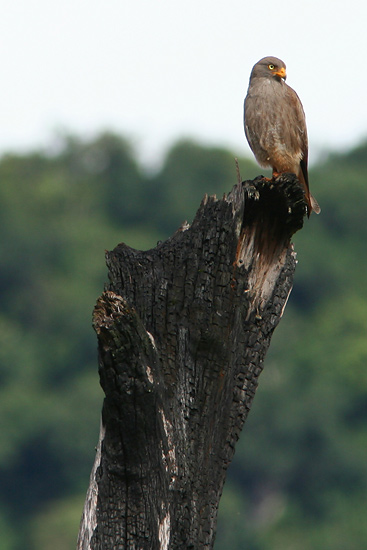
Rufous-winged Buzzard, a raptor of open deciduous forest.
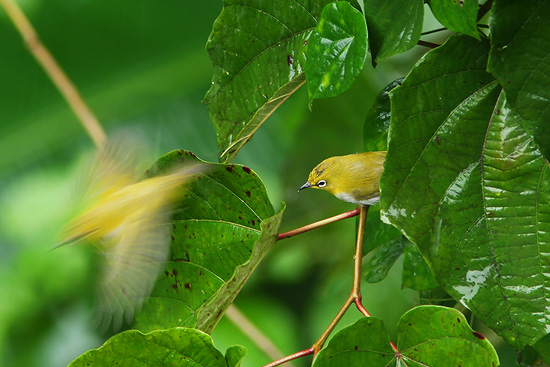
Oriental White-Eyes move fastly in small groups.