Showing posts with label Little Ringed Plover. Show all posts

Wednesday, September 8, 2010

An Ordinary Day

A post compiling shots from an ordinary day at Cho Lae. Lots of migrants have already arrived, especially waders. Large flocks of Wood Sandpipers (Tringa glareola) can be found all over the place. Lots of snipes have already arrived as well, but they are just too shy to be seen in the open. Most of them are Pintail and Common Snipes. Several Stonechats are here as well. I'm getting sick by the split of this bird. It used to be just Stonechat (S. torquata), then Siberian Stonechat (S. maurus), and now the eastern race that winters in Thailand is called the Stejneger's Stonechat (S. stejnegeri). From reading through the discussions in Surfbird email archive, it seems that these newly split taxa are basically impossible to be distinguished in the field since they are all split purely on genetic evidences. In the future, I wonder if these new species will be grouped back into a single species like before or not....
The now so called Stejneger's Stonechat (S. stejnegeri)

A flock of Baya Weavers (Ploceus philippinus) was still occupying the same area around its nesting colony though all the chicks have already fledged and joined the flock their parents. Most male birds have already shed their bright golden head feathers and turning into a drab female-like non-breeding plumage.
A male Purple Sunbird (Cinnyris asiaticus) in eclipse plumage
Wood Sandpipers are abundant but very difficult to get close.

A fluffing adult Little Ringed Plover (Charadrius dubius); the bird is mainly a winter visitor to Thailand and this one is moulting into a non-breeding plumage.
A male Pied Bushchat (Saxicola caprata)

A lone non-breeding Brown Shrike (Lanius cristatus) was also found in the area. It's the subspecies L.c.cristatus, which is a different one from the more reddish superciliosus of Japan. I watched it fed on a very interesting prey, the colourful Long-tailed Lizard (Takydromus sexlineatus ocellatus) which it caught from a small dry field.
This female Pied Bushchat was much more obliging than the male above.
I was lucky to see this shy Slaty-breasted Rail (Gallirallus striatus) coming out to dry its wings after the rain in the late afternoon. It's bird that is not often seen in the open like most of the rail species.
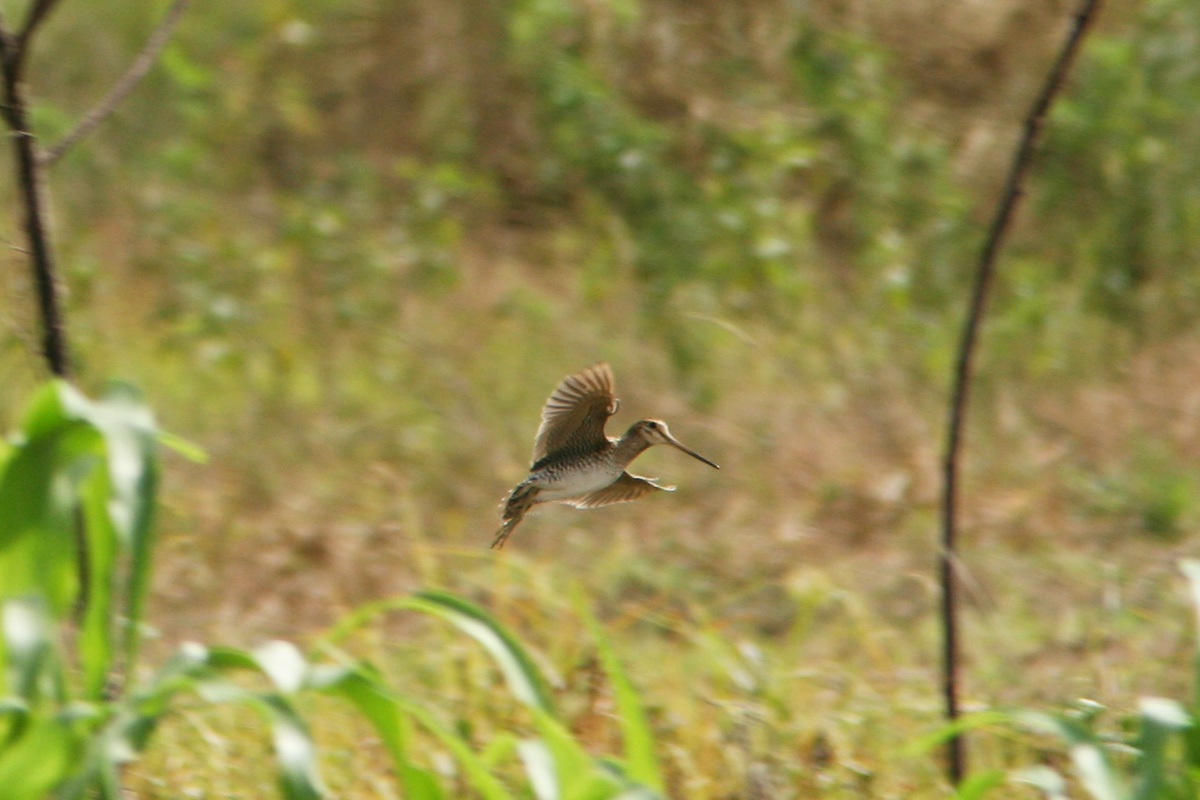
A landing Pintail Snipe (Gallinago stenura); you can see the blurry 'pin' outer tail feathers

A new species to my photo library to end this entry, the Asian Koel (Eudynamys scolopaceus), a very common but super shy member of cuckoo family. This one is an immature male. Adult male lack buffish spots on wing coverts, while female has mottled brown plumage. The right image shows the bird with a Black-collared Starling.

Monday, May 31, 2010

Time's Too Short

Well, you can read the whole story in the post below...this Little Ringed Plover's nest failed miserably to produce offspring for this season. Today I went to check the nest again, hoping for some kind of miracle that the parent birds might come back for that only one egg that's left, but no sign of any plover was found. These are some photos I took just a few days before the tragedy happened. Wish I can see them nesting somewhere else again someday.
Father bird incubating the eggs. The mother has much narrower breast band.

It's the first time for me to see a plover's nest. It looks really neat and beautiful.

It's such a cute bird. What a sad happening...

Here's the place where the birds built their nest.

Saturday, May 29, 2010

Tragedy of the Commons

Remember the Little Ringed Plover's nest I talked about in earlier post? Today I went to check how the eggs have progressed so far and what I found was a car parking really near the nest and a man doing some work next to the car. What even made me more shocked was that there was only 1 egg left! Actually there were 4, but now the other 3 had already gone and the only one that's left was lying outside the nest which looked like a mess! I totally have no idea what happened to the nest. Was it because of a crow? or was it because of that man? I suddenly felt really down. That guy came to me and asked me if I was the one who put the 2 rocks on the ground over there, and yes, I put them since Tuesday in order to protect the bird's nest. The area where the birds built their nest is an abandoned car park where normally no one would come around and use the area. However, sometimes people drive their cars up here to make a u-turn, so I think that I should do something to prevent the nest from being crushed by those wheels. I put 2 fairly large rocks near the front of the nest and waited to see if the birds feel uncomfortable about those rocks or not, but the parent birds didn't seem to worry about that and still came back to the nest as usual. After I answered him that I was the one who put those rocks on the ground, he suddenly blamed me for doing that because he wanted to park his car inside that area and those rocks just got in his way. So I told him that there's bird nesting here and showed him where the nest is. At first, he couldn't even recognise that it's a bird nest. When he finally recognised the nest and the egg, he seemed to be more understandable and even picked up some rocks to put in front of the nest to show that he also wanted to protect the nest as well. I tried to explain to him that it's just too late and actually he's the one that should be blamed not me, but my Japanese skill is not that good so I just couldn't do anything much and left the area depressingly. I never thought these things would happen this fast. I was still watching parent birds coming back to the nest and incubating their eggs on Tuesday evening and what is left now is completely just a mess... It's the saddest thing ever happened to me in a year. I just felt so sad because I was so anticipated about this nest. I wished to take photos of this family through different stages. I wished to see the little chicks grow up slowly and I wished to see them flying out on their own. This abandoned car park is not owned by anyone and I just don't have any authority to prevent anyone from driving his car up over here. The Tragedy of the Commons of Garett Hardin might be about the result of over exploitation on public resources, but my version of the tragedy is about the effect from those actions happening in the commons.

Tuesday, April 13, 2010

Little Ringed Plovers and more

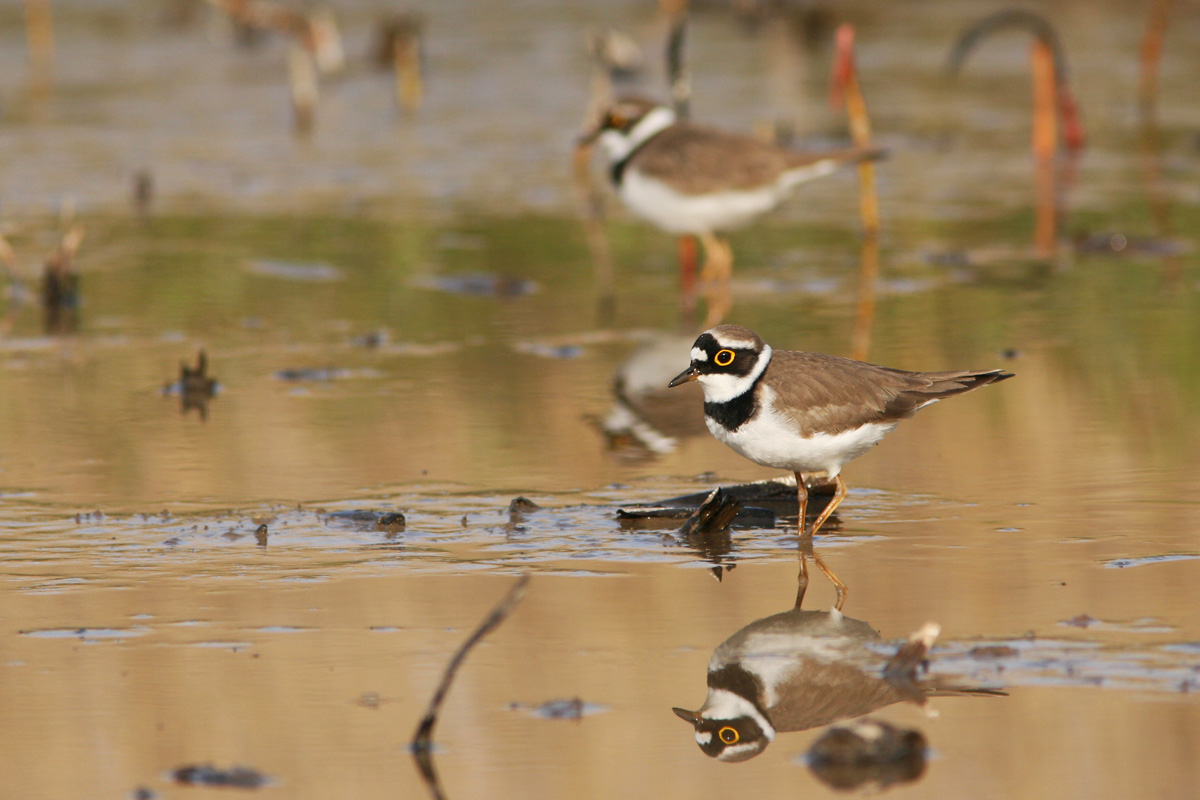
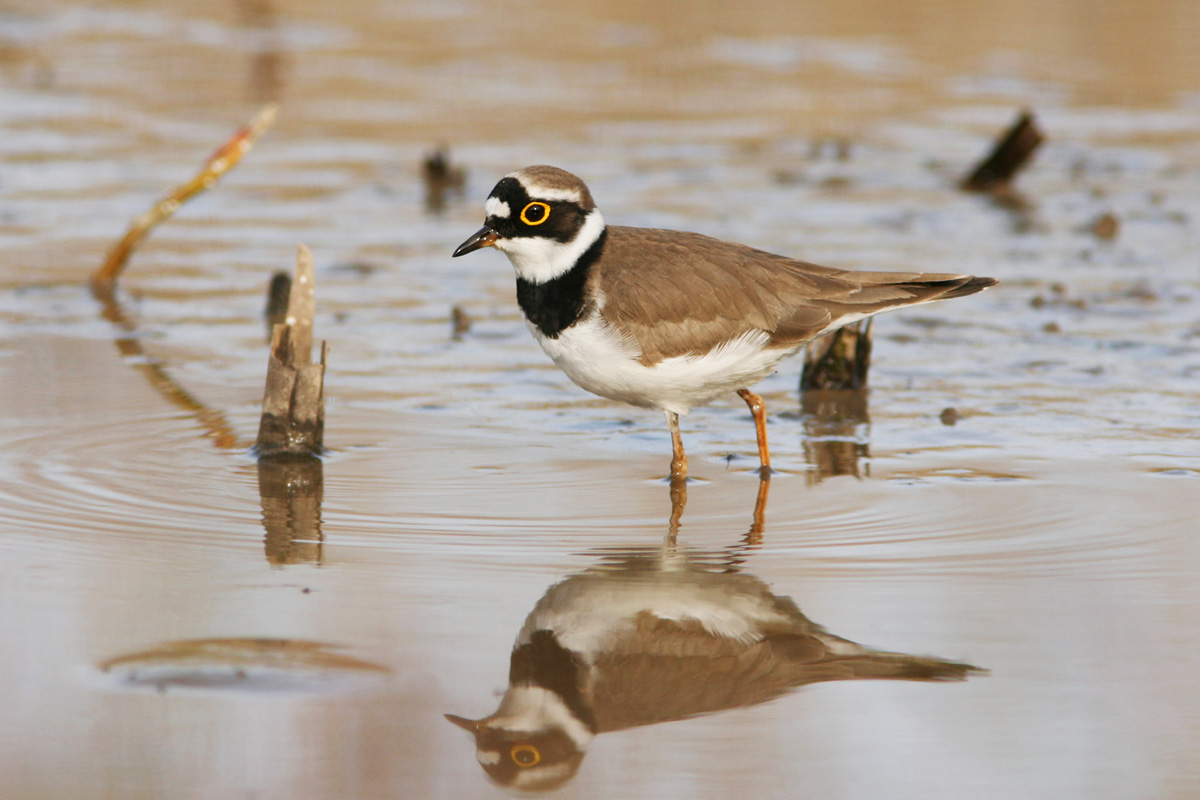
Seems like the city is now filled with Little Ringed Plovers. Some couples are now living at the river mouth near my flat. These photos of several individuals are from last week at Furui-chi. These little birds occupied all the empty lotus fields in the area, and they were all in their cute breeding plumage. As I have said before, it's one of my personal favourite waders, everytime I see it in breeding plumage, I can't help but thinking of a cartoon character.
Breeding adult Little Ringed Plovers

Normally, they're not easy to get close, but I don't know why these birds in Furui-chi were so tame. They were quite busy walking around and picking foods from the flooded fields. Some Common Teals were still staying also. I counted a flock of more than 20 birds. Black-faced Buntings, Barn Swallows and Common Snipes were very common and I luckily saw a single Ruddy-breasted Crake hiding in the reeds. Lots of birds singing, included Japanese Tit and Oriental Bush Warbler.

Meadow Bunting

Tuesday, April 6, 2010

Time For Waders

A breeding male Bar-tailed Godwit (Limosa lapponica) was found at a small beach at Rokushou-en on the same day I went to Minami Tatte-Ishi koen. The bird was very tame and was feeding along with a small group of Black-headed Gull. There was also a pair of breeding Little Ringed Plover (Charadrius dubius) nearby.
It caught lots of these strange creatures.

Subspecies L.l. baueri has strongly barred rump.

It has an interesting way of finding food.

With a friend, the Black-headed Gull, in the background

Then it went to sleep.

Little Ringed Plover in breeding plumage, one of my favourite waders.

And a photo of an immature Black-headed Gull with the same
Bar-tailed Godwit to end this entry.