Even though I have already complained about the lack of birds during this winter in a few other posts, this post is also dedicated to the same topic. Sekinoe kept disappointing me so bad that I have lost my motivation to visit it again. I've been thinking of going to Oita River for a few days now, but I also fear of not seeing any decent bird. This winter seems to be much delayed too, so I am not sure if interesting migrants like the Baikal Teal that I found last winter or the Japanese Waxwing that I missed, have already arrived or not. Anyway, at least I have found 2 Beppu's firsts during this season, which are the Japanese Sparrowhawk (Accipiter gularis) that I found both at Hamawaki and Rakutenchi, and the Common Coot (Fulica atra) at Sekinoe and Furuichi.

Juvenile Japanese Sparrowhawk (Accipiter gularis) at Hamawaki on December 6, 2011.


Possibly different juvenile Eurasian Sparrowhawks (Accipiter nisus) at Sekinoe
The only Accipiter hawk that I've found in Beppu has always been the Eurasian Sparrowhawk (Accipiter nisus). This winter has been a little bit different because 2 Japanese Sparrowhawks were found in the southern part of Beppu including Hamawaki and Rakutenchi entrance. I was actually unsure about the identification of the bird in the first picture at first, but after sending it to a raptor expert, I was confirmed that it is a juvenile Japanese Sparrowhawk. It has different streaking and barring pattern on the underparts with a much shorter tail. Juvenile Eurasian Sparrowhawk has no vertical streaking on the breast with a much longer tail.

Male Common Teal (Anas crecca)
A flock of Common Teals resting in the afternoon


Eclipse male and female stretching wings


Comparing to other years, the number of waterfowls at Sekinoe is quite disappointing. Normally, a large flock of Common Teals (Anas crecca) would be filling the whole lotus fields by late November. However, this year there were only about 20 birds. There was a pair of male Mallards (Anas platyrhynchos) among the flock of Common Teals and a single Common Coot (Fulica atra) swimming in the river.I was so shocked to see the emptiness of the fields. Only a pair of Common Sandpipers, a lone Buff-bellied Pipit, a Grey Wagtail and a pair of Japanese Wagtail were found feeding in the fields at Sekinoe. Things are a little bit better on Furuichi side. I flushed up a single male Greater Painted-Snipe and an extremely shy Ruddy-breasted Crake was seen moving and calling in the grass.

Male Mallards (Anas platyrhynchos)

Ruddy-breasted Crake (Porzana fusca erythrothorax)

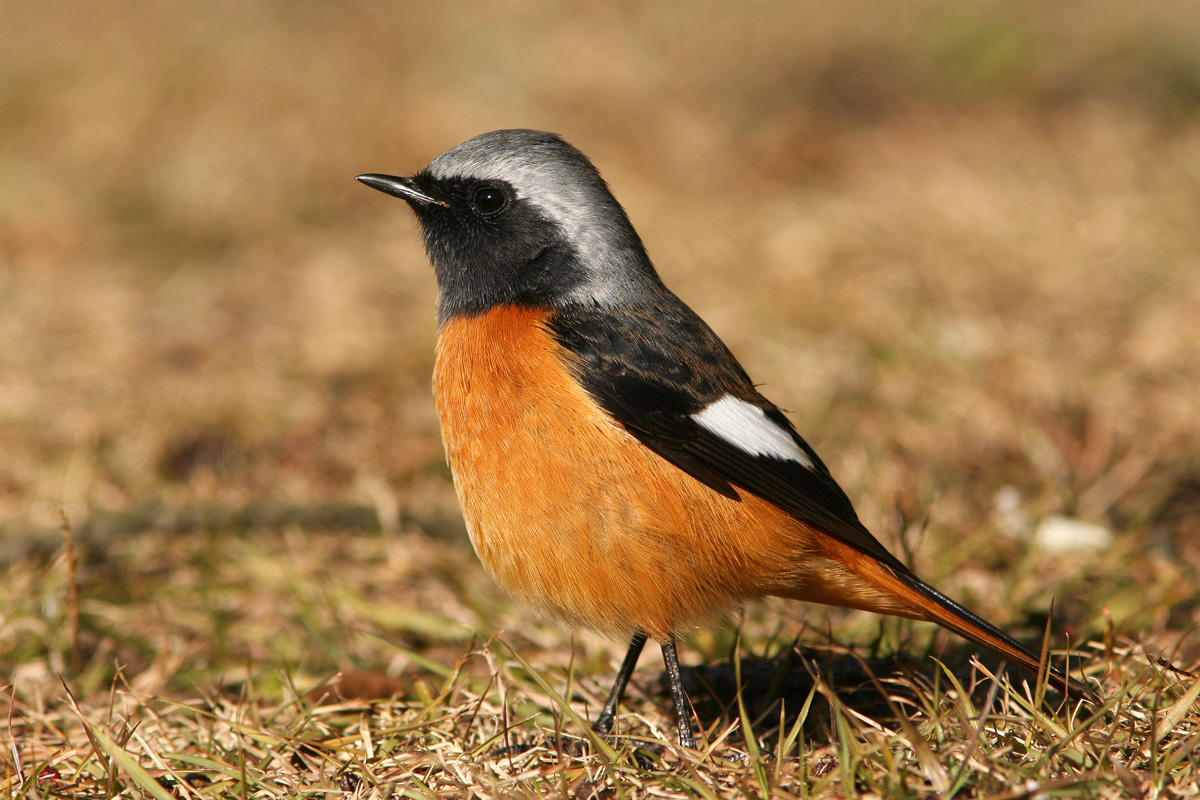
Male Daurian Redstart (Phoenicurus auroreus)


And the female
This year even the Daurian Redstart (Phoenicurus auroreus) which normally passes through Beppu in a large number seems to be fewer than ever. I've always got decent shots of this species during autumn either at Sekino or Beppu Park easily without much effort. However, this year it was more difficult for me to get any decent shot of the birds. Apart from these usual migrants, I also found a single Common Kestrel (Falco tinnunculus) soaring above Sekinoe field and a few Black-faced Buntings (Emberiza spodocephala personata) flicking within the reeds. It's the species that I'm still waiting to get a decent shot of. On my recent visit on December 4, I also found another Common Coot feeding in an open lotus field along with a small flock of Common Teals at Furuichi.

Common Coot (Fulica atra)

Male Bull-headed Shrike (Lanius bucephalus)

Common Kestrel (Falco tinnunculus)


Female Black-faced Bunting (Emberiza spodocephala personata)




.jpeg)