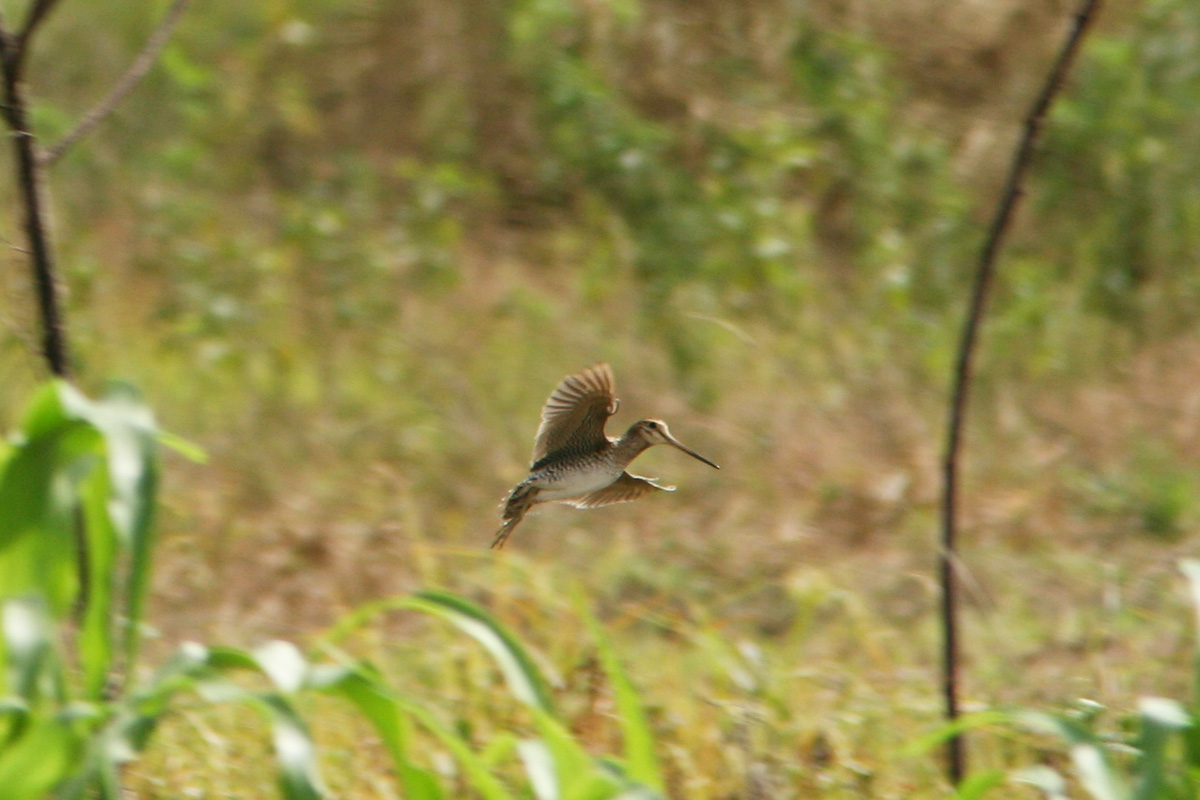
I used to get bored when I'm stuck at home during week days, but now I'm quite enjoying it! For some reasons, I feel like there are much more birds in my house than before. I wake up and enjoy seeing different species of birds coming to my house. Some species only pass by, but many are residing within my house area. The abundance of birds became the main reason why I want to stay home.


Rufous Treepie (Dendrocitta vagabunda) is an unusual bird to be found in the backyard, but a pair used to visit my house pretty often many years ago. I was so happy to find that a flock of about 4-5 birds are now coming back to my house again. It has a very strange call with an equally strange calling pose as well. The above shots were taken late in the evening and it was already dark, but I'm so happy to get these shots of this precious bird of my house.


There are 2 species of doves that can be found within my house, the Spotted and Zebra Dove. The above Zebra Dove (Geopelia striata) is one of the 4 individuals that usually come to my house. I guess it's a female bird judging from its richer pinkish breast. Male bird seems to have greyer, less rufous plumage.


 Here's the other dove that can be found around my house, the Spotted Dove (Streptopelia chinensis). It is much more abundant than the previous Zebra Dove, and much less attractive. It is by far the commonest dove in Thailand and also a very popular cage birds because of its deep sweet call. Lots of this bird enjoy feeding in the lawn and empty grounds around my house everyday.
 This broken-legged Spotted Dove has been living in and around my house for many years now, probably more than 5 years. It is a female and I'm happy to see that it's still around producing new fledglings every year.


The Black-collared Starling (Sturnus nigricollis) used to be just a visitor to my house. Now a pair is nesting on the same Ditar Bark tree as the Coppersmith Barbet in the previous post. The nest is built on the top of the tree about 10-12 metres from the ground. The parents are very busy finding food to feed their youngs. I always see them perching with a mouthful of earthworms and other bugs. This is actually their second brood. The first has produced 2-3 fledglings which can be seen in this post.


The focused bird in the large picture is probably a female since it is has more barring on the sides of its breast. I really like watching these Zebra Doves because they are so small and cute. The bird is only about the same size as a quail. It is enjoyable to watch them walking and feeding together in pair. No wonder why it's one of the most popular cage birds in Thailand.
Here's the other dove that can be found around my house, the Spotted Dove (Streptopelia chinensis). It is much more abundant than the previous Zebra Dove, and much less attractive. It is by far the commonest dove in Thailand and also a very popular cage birds because of its deep sweet call. Lots of this bird enjoy feeding in the lawn and empty grounds around my house everyday.This broken-legged Spotted Dove has been living in and around my house for many years now, probably more than 5 years. It is a female and I'm happy to see that it's still around producing new fledglings every year.