So March 15 was our last full day birding at Fraser's Hill. Today, my target was getting photos of the colourful Orange-bellied Leafbirds (Chloropsis hardwickii malayana), Black-throated Sunbirds (Aethopyga saturata wrayi) and Streaked Spiderhunters (Arachnothera magna musarum) which were feeding on the flowering bottle brush trees just outside our windows. These birds can also be found in northern Thailand as well, but they are all different subspecies. The Black-throated Sunbirds were the most frequent visitor, but they're often chased away by the much larger Orange-bellied Leafbirds. The leafbirds were very vocal. Male birds could sing so many different kind of songs. Some sounded just like the Streaked Spiderhunter's call, and some like Oriental Magpie Robin's. Even the females had several different calls as well. I was often tricked by their various calls.


Male Orange-bellied Leafbird (Chloropsis hardwickii malayana)
 Here's the female
 Female Silver-eared Mesia (Mesia argentauris tahanensis)
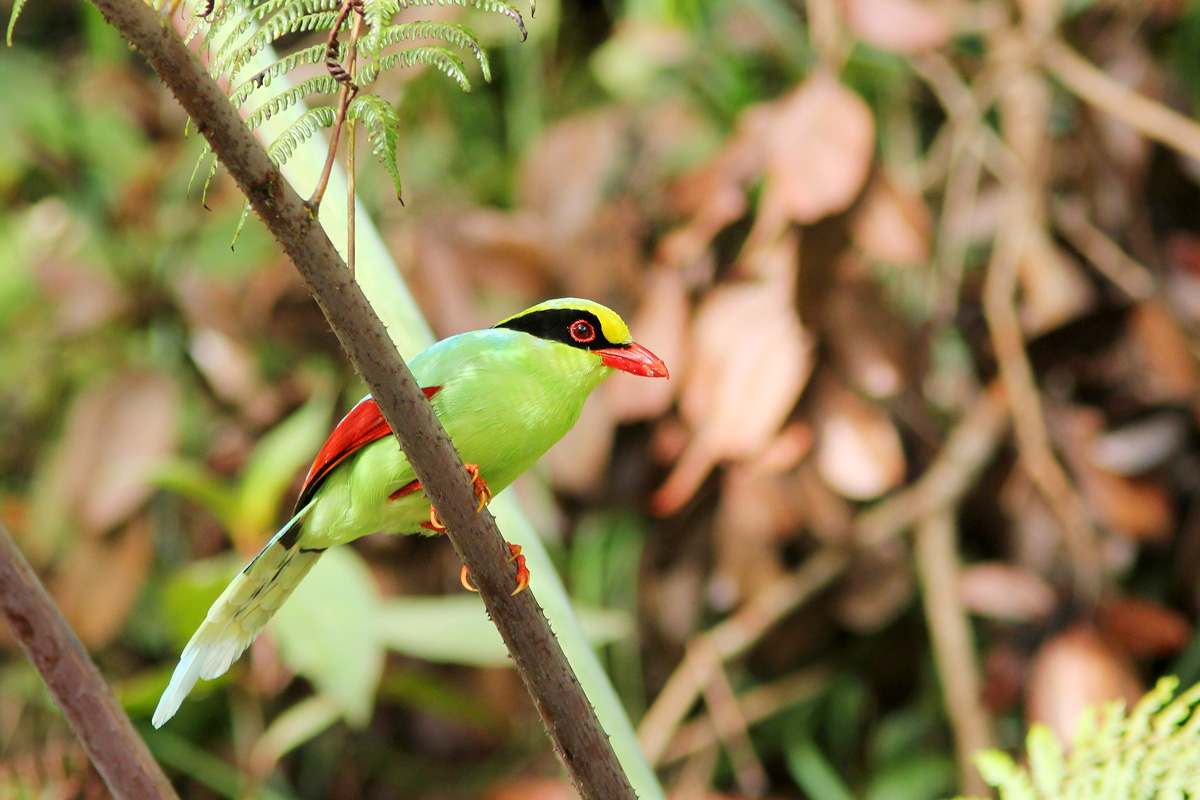


Common Green Magpie (Cissa chinensis robinsoni)
Though I still couldn't get any decent shot of the Black-throated Sunbirds, we decided to move on. However, we were all stopped by a small flock of about 4-5 Common Green Magpies in front of the hotel before leaving. This time I could finally get some decent shots of it. After the magpies have gone, we headed straight to the Rumah Methodist for the Siberian Thrushes (Zoothera sibirica). Along the way, we stopped briefly for another beautiful male Mugimaki Flycatcher, but the bird wasn't so cooperative, so I got photos of several Mountain Bulbuls (Ixos mcclellandii peracensis) and a shy male Emerald Dove (Chalcophaps indica) instead.


Mountain Bulbul (Ixos mcclellandii peracensis)
 Male Emerald Dove (Chalcophaps indica)
Shortly after our arrival, my father spotted a pair of the Siberian Thrushes, male and female, feeding on the road. The male has very dark plumage with no white on its belly indicating that it's the subspecies Z.s. davisoni. The pair was later accompanied by one more male and female. The second male showed decent white centre of belly, so it was the subspecies Z.s. sibirica. We were so lucky to see 2 different subspecies together at the same time. Unfortunately, the white-bellied one was too shy for me to get any photo of it. Unlike the first two birds which were unexpectedly approachable. There were 6 of us on the road with our cameras trying to get closer to the birds that apparently didn't care much about us. All the hides we prepared to use were thrown back at the car. I've never seen such approachable Siberian Thrushes before. All Siberian Thrushes I've seen both in Thailand and Beppu were all so shy. Apart from the thrushes, a pair of Rufous-browed Flycatchers (Ficedula solitaris malayana) and Large Niltavas (Niltava grandis decipiens) also put on a great show.


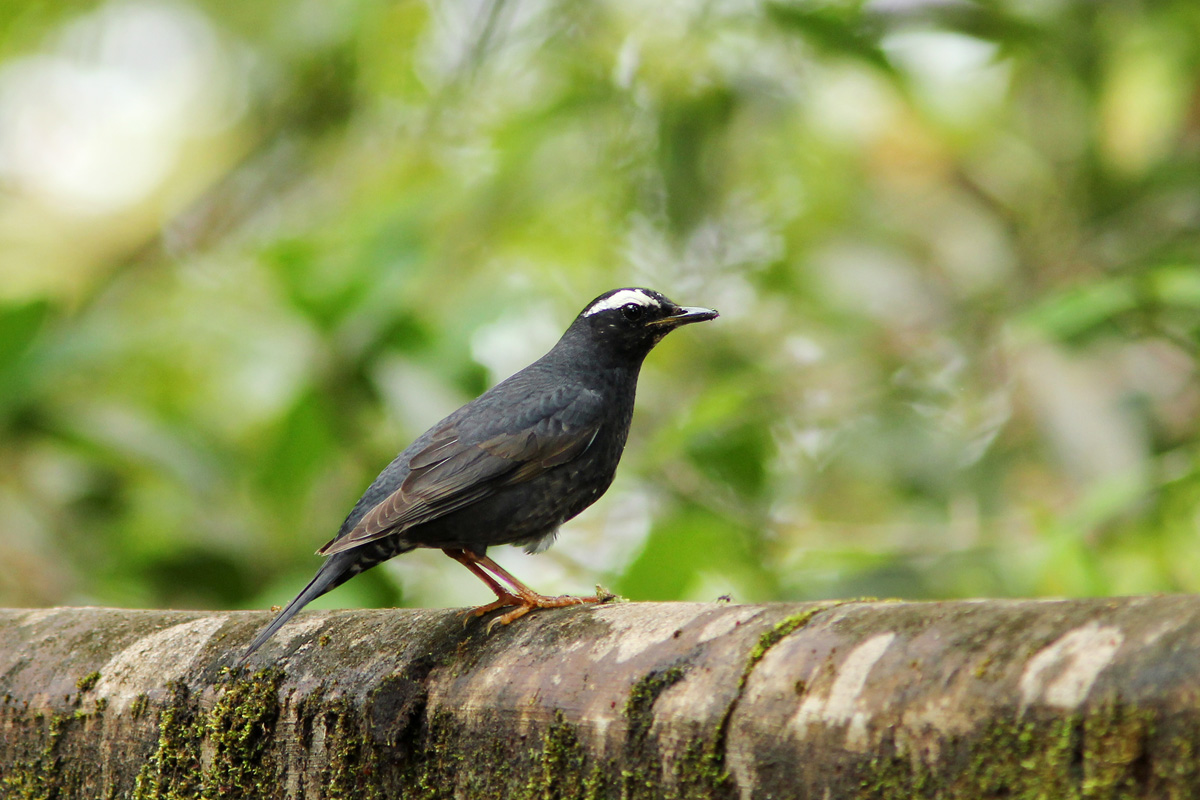

Male Siberian Thrush (Zoothera sibirica davisoni)


An even tamer female


A bit of birdscaping
 Rufous-browed Flycatchers (Ficedula solitaris malayana)
 The place where we photographed the thrushes
 Blue Nuthatch (Sitta azurea expectata)
 Juvenile Lesser Racket-tailed Drongo (Dicrurus remifer peracensis)
 Female Mugimaki Flycatcher (Ficedula mugimaki)
 Lesser Racket-tailed Drongo (Dicrurus remifer peracensis)
 Female Greater Yellownape (Picus flavinucha wrayi)
 Chestnut-crowned Warbler (Seicercus castaniceps butleri)


 Here's a female


 Male Orange-bellied Leafbird (Chloropsis hardwickii malayana)
 Yellow-browed Warbler (Phylloscopus inornatus)
 Male Oriental Magpie-Robin (Copsychus saularis musicus)
Rufous-browed Flycatchers (Ficedula solitaris malayana)The place where we photographed the thrushesAs we were all enjoying taking photos of the thrushes and flycatchers, Mr Mark shouted "Nuthatch!", then I suddenly shifted my attention to one of the little birds flitting up and down the tree trunk above my head. It was a brilliant Blue Nuthatch (Sitta azurea expectata), truly one of the star birds of Fraser's Hill, which I've been looking for since the very first day here. Although my photo doesn't do any justice for this extremely cute and unusual looking nuthatch, it is such a memorable bird and I just have to put a photo of it in my blog anyway. For a better idea of how spectacular it is, take a look at this photo.
Blue Nuthatch (Sitta azurea expectata)Juvenile Lesser Racket-tailed Drongo (Dicrurus remifer peracensis)Female Mugimaki Flycatcher (Ficedula mugimaki)Lesser Racket-tailed Drongo (Dicrurus remifer peracensis)Female Greater Yellownape (Picus flavinucha wrayi)Chestnut-crowned Warbler (Seicercus castaniceps butleri)It was around 11 when the thrushes disappeared, so we decided to go back and enjoy our lunch. After lunch, we stopped briefly at the same public shelter where we saw the male Red-headed Trogon. This time we couldn't find the trogons, but there were a few Sultan Tits, a male Black-And-Crimson Oriole and a female Mugimaki Flycatcher instead. I walked down along the road with my father and came across a small bird-wave consisting of many Mountain Fulvettas, a pair of Chestnut-crowned Warblers, a Fire-tufted Barbet, 2 Lesser Racket-tailed Drongos and 2 Greater Yellownapes. I tried so hard to get some photos of the Yellownape, but both of them kept staying in the canopy and the light was really bad as the rain was approaching.


Male Black-throated Sunbird (Aethopyga saturata wrayi)
Here's a female 

Streaked Spiderhunter (Arachnothera magna musarum)
Male Orange-bellied Leafbird (Chloropsis hardwickii malayana)Yellow-browed Warbler (Phylloscopus inornatus)Male Oriental Magpie-Robin (Copsychus saularis musicus)And once again, we finished our day shooting birds in front of the hotel. It rained much earlier than the other days and still continued raining until the evening. I didn't feel quite disappointed though, since we could still see so many birds just from the balcony of the hotel. I finally got some satisfiable shots of the Black-throated Sunbirds and Streaked Spiderhunters. A Fire-tufted Barbet was also showing well on the treetop giving its weird cicada-like call, but just a little bit too far for my lens. I also had a great time sitting down with my sketchbook in my hands. Tomorrow morning, we'll be leaving this lovely place and head to our next destination, Merapoh.