The next morning I woke up at 6 and took the 6.48 bus to the same bus stop. Today I'm going to spend the whole day at the shore so I prepared some onigiri and bentou. It was still pretty dark when I arrived at the bus stop around 7.15. The walk to the shore was not as tiresome as the day before. Cold temperature made everything looks a bit prettier along the way. The Black-billed Magpie and Tree Sparrow seemed to be one of the first birds to wake up and feed.


I was extremely angry when I finally arrived at the shoreline and found out that the sea tide was even lower than yesterday and almost
no bird there on the mudflat near the walkway. I disappointingly took few pictures of the shelduck that was standing close to the walkway and left the mudflat to the otherside of the shore where there were few reedbeds. From what I've read in Mark Brazil's book, the
Chinese Penduline-Tits (
Remiz consobrinus) are usually found here. When I arrived there I was so surprised that 25 years have past and nothing's changed. I immediately found a flock of about 30+ birds moving around in the reedbed. They were extremely active and really really hard to get decent shots. I felt much better after witnessing the emptiness of the shoreline. The Penduline-Tit has a very distinct high pitched call unlike those of the buntings or white-eyes which can easily be recognized. I spent time running around chasing these little cuties until I've got some quite satisfied results and then moved on to the other part of the reed bed.


A non-breeding male
Chinese Penduline-Tit
And a female


And another non-breeding male
Along the way there were so many
Siberian Meadow Buntings and at the end of the reed bed more than a hundred of
Reed Buntings were gathering there. They were easily flushed away and tended to hide deep in the reed, so photographing went on roughly. I sat and waited for them to come up for about an hour and finally got some nice shots. Bird photography in reed bed can actually be so much fun. It is tricky but the results seem to be pleasing with that warm tone of the dry reeds and morning light. Other birds around the reed bed include Japanese White-eyes, Grey-capped Greenfinch, Eurasian Tree Sparrow, Grey Heron, Pale Thrush and surpringly a
Ruddy-breasted Crake (
Porzana fusca).

A female
Siberian Meadow Bunting


A female
Reed Bunting
This male bird has already possessed some of the breeding plumage features.

A shy
Ruddy-breasted Crake


A typical non-breeding male
Reed Bunting

Some more shots of the female
Reed Bunting
And a female
Siberian Meadow BuntingI tried so hard to see if there's any rare
Pallas's Bunting (
Emberiza pallasi) or not but failed miserably. A flock of 8
Northern Lapwing (
Vanellus vanellus) flew from somewhere far away and landed on the field next to the reed bed. I tried photographing them but they were too wary and flew out before I got any satisfied result. After the lapwings had gone, I walked back to the shore and found that the sea tide has risen up. Some birds were coming closer to the walkway but I finally knew that the highest tide was still too low to push the birds up to the walkway. I definitely have to come back here again in spring.


A flock of
Northern LapwingI like the pattern of their back when they're landing.
I was even able to take this crappy video of the shelduck by my compact digital camera.
Notice the sound in the video. That's the sound they make when they dabble on the mud!


This immature bird is the tamest one. It came so close to the walkway and I later realized that I took too many pictures of it.
While I was enjoying taking photos of the shelducks, the flock of Dunlin nearby suddenly flushed off making the shelducks flew out too. I knew right then that there must be some kind of raptor passing by so I looked up to the sky and omg I surprisingly found my long time awaited
Short-eared Owl (
Asio flammeus). The bird flew pass over my head and finally disappeared into a distance. It even looked down to me while it was right above my head. That just totally made my day!


A
Short-eared Owl passing over my head

After that even the
Tree Sparrow looked super cute.

I took this picture because I think the light was pretty but I later found a spoonbill in it!
Can you spot the bird?


This immature
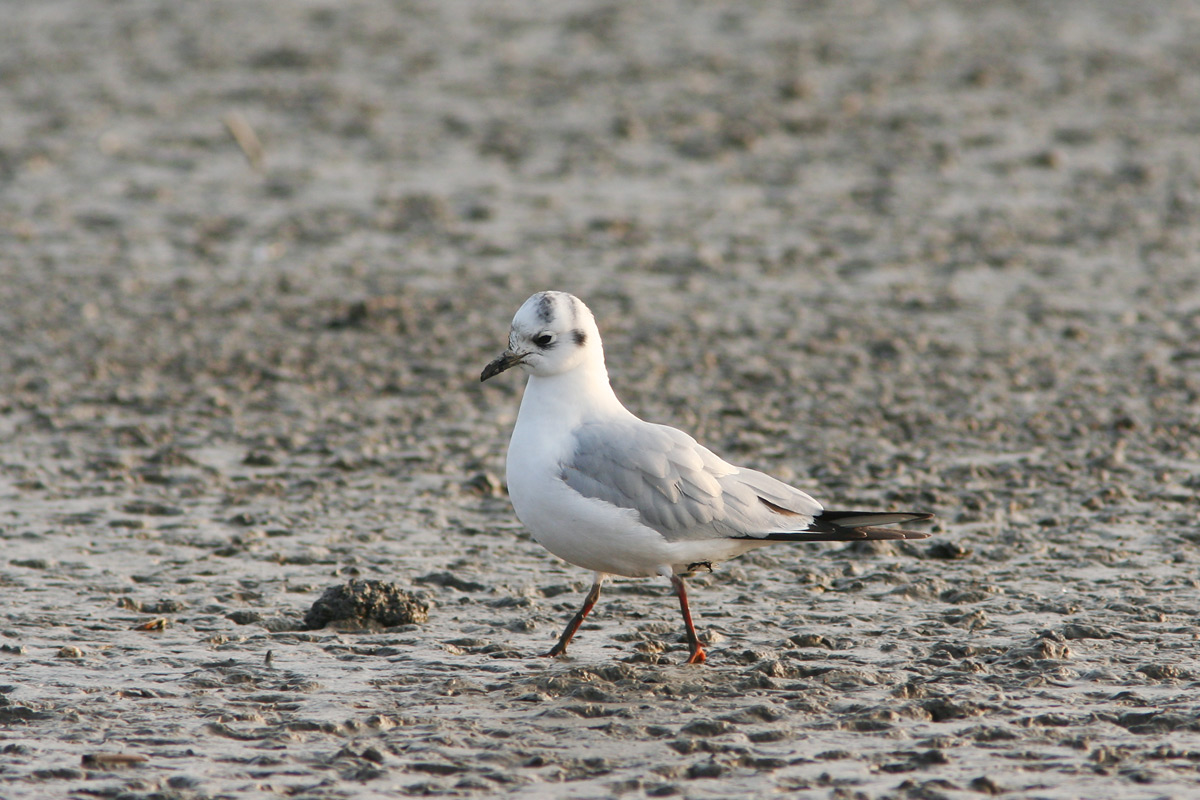
Saunders's Gull was so aggressive. It'd give a long aggressive call to anyone who passes near its own territory.
I don't like this lighting condition at all, the sun was always in front of me, so I walked out towards the sea on one of the boardwalks and decided to sit there facing back to the inland waiting for any birds to come around in good light. I had quite a good time having my lunch there and taking photos of mudskippers, dunlins and flying Saunders's Gulls.