Showing posts with label Chinese Spot-billed Duck. Show all posts

Wednesday, December 7, 2011

Chinese Spot-billed Ducks

It might be the commonest duck in Japan, but it's quite a special one for Beppu. I've seen this duck many times elsewhere in Japan, including the nearby city, Oita, but I've only seen it once in Beppu at Sekinoe flying over my head. Last winter I saw photos from Furuso-san taken at the river near Hamawki. She photographed a small flock of Spot-billed and a female Falcated Duck, another species that is surely among my top wishlist. Even though I've seen a small number of Falcated Ducks both at Kitsuki and Oita River, I've still yet to get a decent shot of this extremely beautiful duck. So on November 26, I went to Hamawaki to check if there's any interesting ducks around. I found no Falcated Duck, which was not surprising, but at least there were 6 Chinese Spot-billed Ducks (Anas zonorhyncha) presenting at the river.
Chinese Spot-billed Duck (Anas zonorhyncha)


The ducks were relaxing and bathing in the river. They are super tame just like any other Spot-billed Ducks I've seen elsewhere. Well, maybe except the ones in Oita River where they are not very accustomed to human. I had fun taking photos of them bathing with high speed. The results look quite funny as you can see from the pictures above. I especially like the one where the bird puts its legs up splashing the water. I also took lots of videos the birds. Below is a compilation of the videos I took.

Chinese Spot-billed Ducks bathing and resting

Chinese Spot-billed Duck (Anas zonorhyncha)

The bird was once treated as a subspecies of the Spot-billed Duck (Anas poecilorhyncha) which is now called Indian Spot-billed Duck. The Indian Spot-billed has a much different facial pattern, lacking the dark line at the base of the lower mandible, with bright red spot on the lores. I also believed that the speculum of the Chinese Spot-billed is much bluer than the Indian Spot-billed, which is typically greenish, but from what I saw, the colour of speculum is hugely affected by angles and light. The late afternoon light really made the speculum look genuinely green. At least a visit to Hamawaki gave me a chance to get some decent photos of this common duck in a kind of light that I want.

Friday, February 4, 2011

Oita River

These photos were all taken earlier in January at Oita River. I started my day by dropping out at Kaku Station, then made my way upstream along the river to Onozuru and Taromaru. The scenery of Mt. Yufu and Mt. Tsurumi was perfect in the warm morning light. I just wished there were more snow on the mountains. Along the reeds, there were many Reed Buntings (Emberiza schoeniclus), but they mostly kept hiding inside the reeds and rarely popped out into the open. A small flock of Common Teals and Mallards were resting in the rivers, as well as a pair of Ruddy-breasted Crakes, which I heard them making weird sounds inside the reeds.
A view of Mt. Yufu (left) and Mt. Tsurumi (right)

Non-breeding Reed Buntings (Emberiza schoeniclus)
Northern Goshawk (Accipiter gentilis)
Carrion Crow (Corvus corone orientalis) calling
Around Kaku area, I spotted a single Northern Goshawk soaring high up in the sky. The bird later landed into a very thick bush on the river side. There was another female Common Kestrel flying around the area as well. Actually, the target of the visit was the Japanese Waxwing, of which a small flock was photographed a few days earlier. I searched through the area but found nothing but the common stuff, including a flock of Long-tailed Tits, Meadow Buntings, Japanese Grosbeaks and Oriental Turtle-Doves.

Long-tailed Tit (Aegithalos caudatus trivirgatus)
Mallards (Anas platyrhynchos)
Oriental Turtle-Dove (Streptopelia orientalis)

Saturday, November 6, 2010

Sekino-E

I visited the fields at Sekino-e (関の江) very often since the beginning of October, even before I found the goose. Here's a compilation of photos I took earlier last month, mainly damselflies and herons. October seems to be a very good month for dragonflies and damselflies before they disappear during winter. One of the most numerous species was the tiny turquoise Ischnura senegalensis. I enjoyed taking my time photographing these tiny insects under the warm evening light a lot.


Ischnura senegalensis

The brown ones are females.
There weren't so many new migrants during the first half of the month actually, but it's gotten much better towards the second half. The Daurian Redstarts are among the first decent migrants. This year, I first found them at Sekino-e on October 17, one day later than last year (October 16). A few thrushes(either Dusky or Pale) were seen during the last week of October and the number of Common Teal has dramatically increased towards the end of the month. Other birds like Grey Herons, Common Kingfishers, Japanese Grosbeaks and Great Egrets were constantly seen throughout the month.

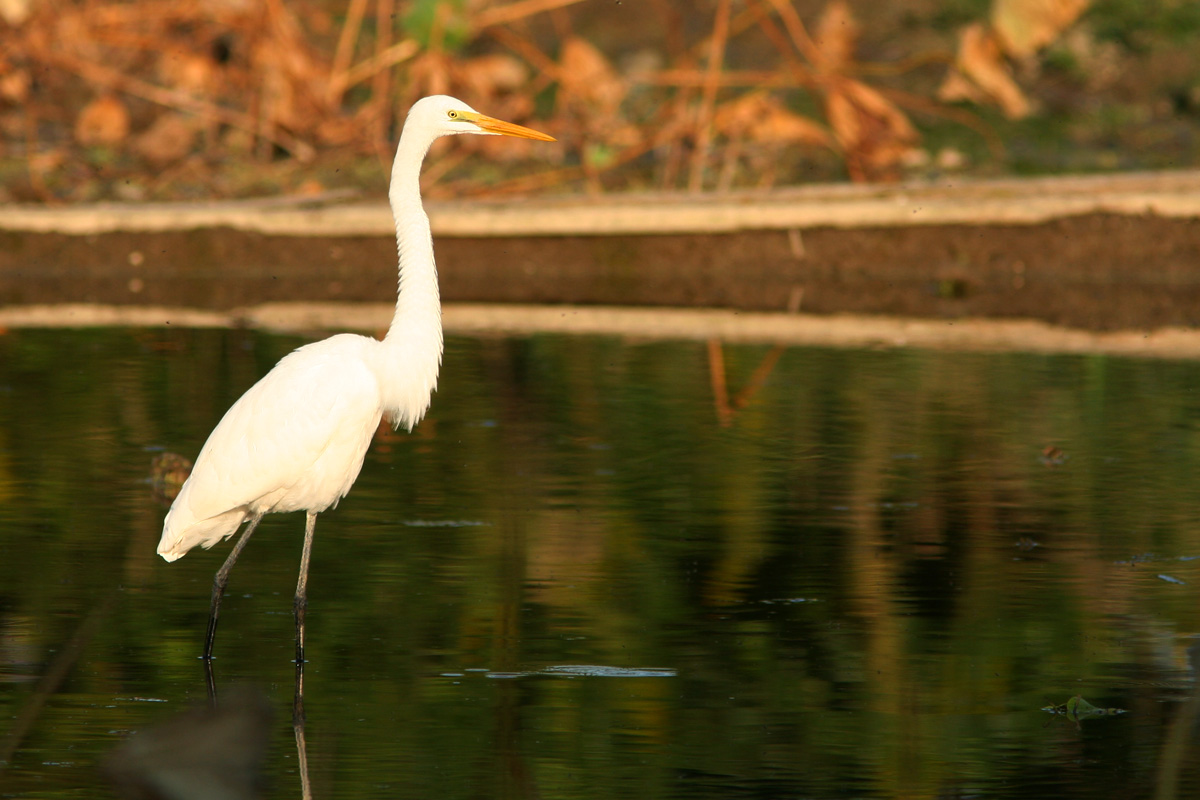
Non-breeding Great Egrets (Casmerodius albus)

Grey Herons (Ardea cinerea)
The first flock of Chinese Spot-billed Ducks (Anas zonorhyncha) in Beppu.
Although there are plenty in Oita, I've never seen one in Beppu before.

A kind of Skipper butterfly. Don't know which one?